Luxury Perception: Why Some STRs Look Cheap & How to Fix It
Why Your Airbnb Looks Why does an expensive Airbnb still look cheap? Learn the 5 STR design mistakes that lower perceived value—and how to fix them without spending more.
Best for: STR / AirBnb / vacation rental owners and managers
Quick Answer:
An Airbnb can look cheap even when you spent a lot because guests don't see your furnishing budget—they see the finished experience. Expensive furniture won't automatically make a vacation rental feel luxurious if the room lacks cohesion, contrast, personality, comfort, or proper scale.
The good news is that you don't always need to spend more. You need to spend more strategically.
After designing dozens of STRs and studying 250 AirBnb properties across 10 U.S. markets, I've found that luxury perception comes from how individual design decisions work together—not simply from the price of the products you buy.
In the sections below, we'll look at the five design mistakes that most commonly make an STR feel less valuable than it actually is, how to identify them, and what you can fix before spending another dollar.
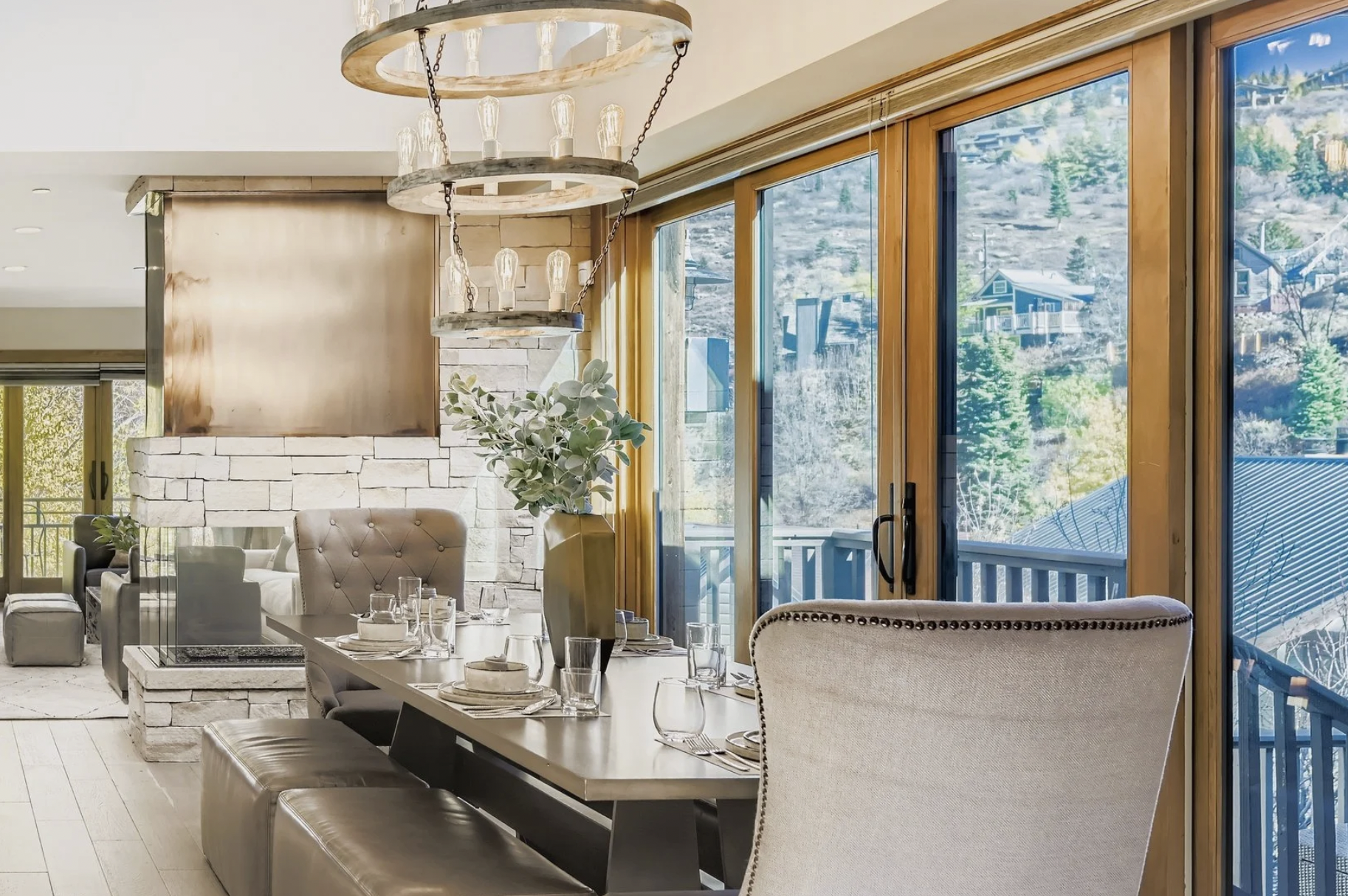
Luxury STR in Park City, Utah; Designed by VR Decor
Why Does My Airbnb Look Cheap Even When I Spent a Lot?
Because what you spend and what your design communicates are 2 different things.
Your guests don't know whether you spent $6,000 on a sofa or found one for a fraction of that price. They don't see your receipts. They see your listing photos, walk through the front door, sit on the furniture, sleep in the bed, and decide whether the overall experience feels worth what you're charging.
That creates an important distinction:
Your furnishing budget is an input. Perceived value is the result.
In my study of 250 STR properties across 10 U.S. markets, luxury perception was one of three design characteristics strongly correlated with higher nightly rates.
That finding does not mean replacing one sofa will automatically increase your ADR by a specific amount. Design is only one factor in a property's performance. Location, seasonality, demand, pricing, reviews, amenities, operations, property type, and competition all matter.
What the finding does suggest is that how a property looks and feels can be part of how guests evaluate its value.
And after designing dozens of STRs, I've come to a simple conclusion:
You don't always need to spend more to make an STR feel more valuable. You need to make what you spend work harder.
What Is Luxury Perception in Vacation Rental Design?
Luxury perception is the value a potential guest assigns to a property based on what they see and experience.
It is not the same thing as expensive furniture.
It doesn't require every STR to look like a five-star hotel.
And it doesn't mean filling a property with high-end products.
Instead, luxury perception comes from the way several elements work together:
Quality: Do the things guests use feel comfortable and well made?
Cohesion: Do the furnishings and finishes feel like they belong together?
Contrast: Does the room have enough visual definition to keep it from feeling flat?
Personality: Does the property feel distinctive rather than interchangeable?
Design rules: Are the curtains hung high and wide and long enough to reach the floor? Is art hung too high? Are carpets too small? Etc.
Layout: Does the space function naturally and photograph well?
Guest experience: Does the physical experience deliver on the promise made by the listing?
That's why an STR can contain expensive products and still feel cheap.
On the other hand, another property can use relatively affordable pieces and feel considerably more valuable.
Guests evaluate the whole picture, not the price tag attached to each individual product.
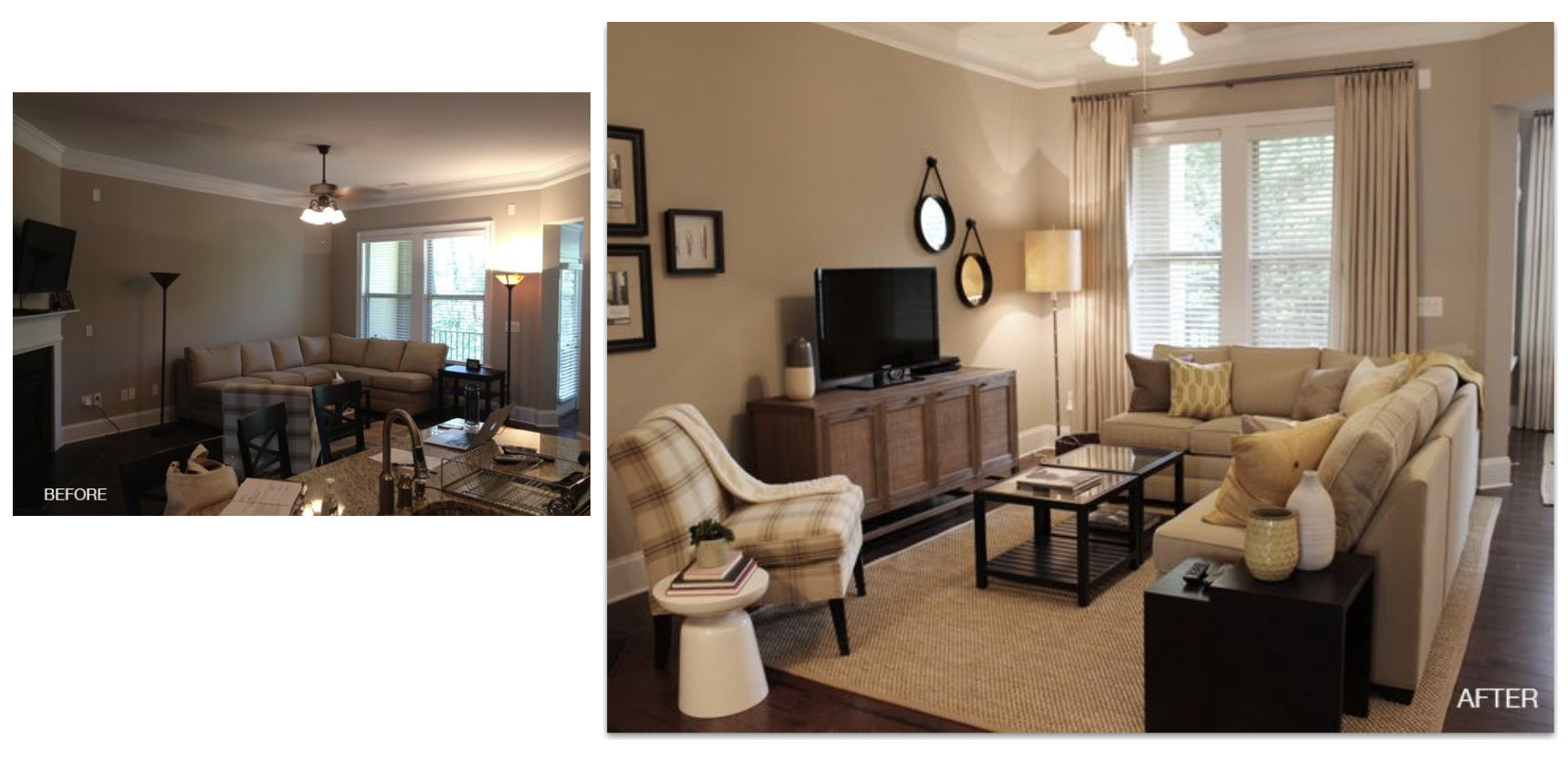
Rearranging what this client already owned makes it look its best
By VR Decor
5 Design Mistakes That Lower an STR's Perceived Value
1. Buying Cheap Where Quality Matters
Where should you spend money when furnishing an STR?
Spend strategically on the things guests use often and where quality directly affects their experience.
Think about:
Mattresses
Beds
Sofas
Dining chairs
Outdoor furniture
Frequently used kitchen items
Silverware and other tactile items
Consider a mattress.
It might barely register in your listing photos, but your guest will spend hours sleeping on it. They'll know whether it's comfortable.
The same is true of a sofa. A beautiful living room doesn't feel premium if the sofa is uncomfortable.
That doesn't mean you need to buy the most expensive option available.
It means you need to understand where the guest will actually experience the difference in quality.
I'd rather see an owner spend intelligently on a comfortable sofa and save on a side table than spread the same budget across mediocre versions of everything.
The same principle applies to outdoor furniture, dining chairs, kitchen items, and other things guests repeatedly touch and use.
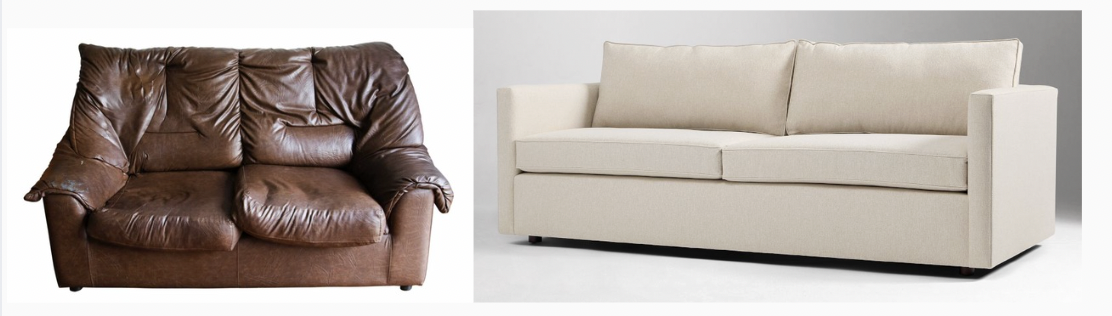
Cheap “marshmallow” sofa vs. West Elm’s good quality “Harris” sofa
Spend where the guest experiences the difference.
2. Furnishing Without a Design Plan
Why does an Airbnb look mismatched even when every piece of furniture looks good?
Because buying good products is not the same as designing a room.
This is how it happens.
You buy the sofa because you like it.
Then you need chairs.
Then a coffee table.
Then a rug.
Then lighting.
Then artwork.
Each purchase makes sense on its own.
Eventually, you step back and realize the room has become a collection of things instead of a cohesive space.
That's the difference between furnishing and designing.
Furnishing asks:
"What do I need?"
Design asks:
"What belongs here, and why?"
Before shopping, establish:
The property's concept
Its personality
The color palette
Major furniture pieces
The focal point
Where you want to invest
Where you can save
What you want the guest to feel
Then every purchase has a job.
Instead of asking:
"Do I like this?"
Ask:
"Does this support the design?"
That one change can prevent a lot of expensive mistakes.
The goal is for a guest to look around and think:
"Someone designed this."
Not:
"Someone went shopping."
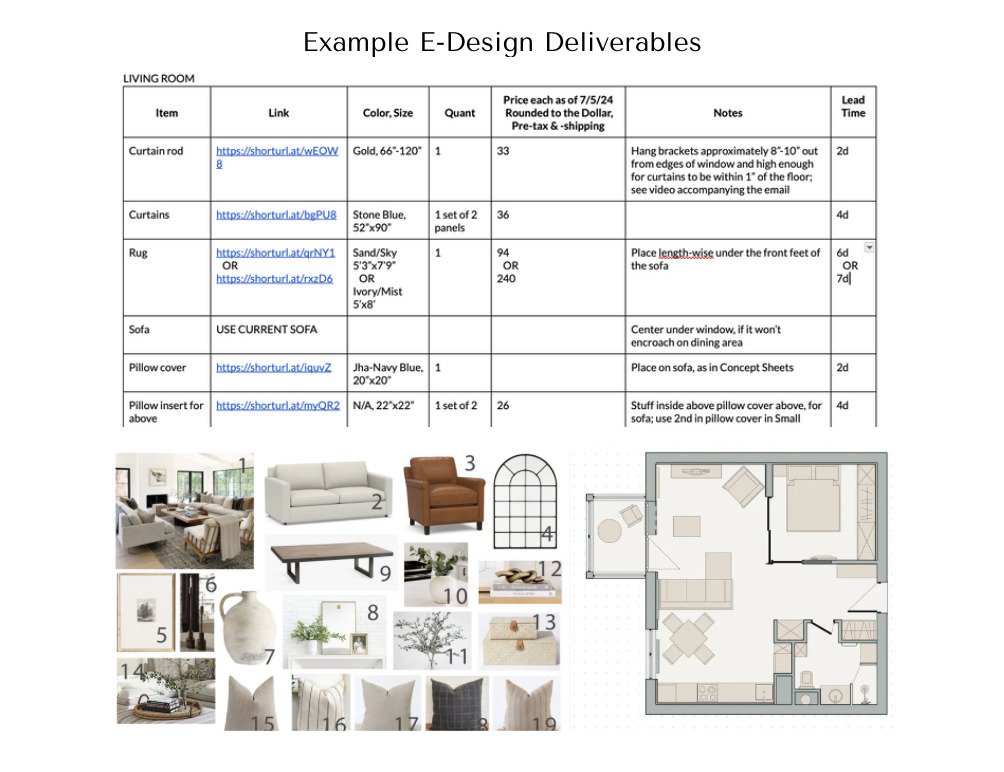
VR Decor’s E-Design Plans give you ALL details needed to put together your STR as if we were there doing it for you
3. Making Everything Neutral
Are neutral vacation rentals a bad idea?
No.
Neutral design can be sophisticated, calming, and highly effective in an STR.
The problem isn't neutral.
The problem is no contrast.
When the walls, furniture, rug, artwork, and accessories all sit in the same muted range, the room can become visually flat.
That's particularly important in a vacation rental because your guest often sees the property in a photograph before experiencing it in person.
Contrast gives the photograph structure and gives the room visual interest.
You don't need to turn the property into a rainbow.
You can create contrast through:
Black and white
Old and new
Traditional and contemporary
Neutral tones with one or two stronger colors
For example, a mostly neutral room with deep green, terracotta, cobalt blue, or warm yellow accents can feel more intentional without becoming overly colorful.
The goal isn't to use more color.
The goal is to give the eye somewhere to go.
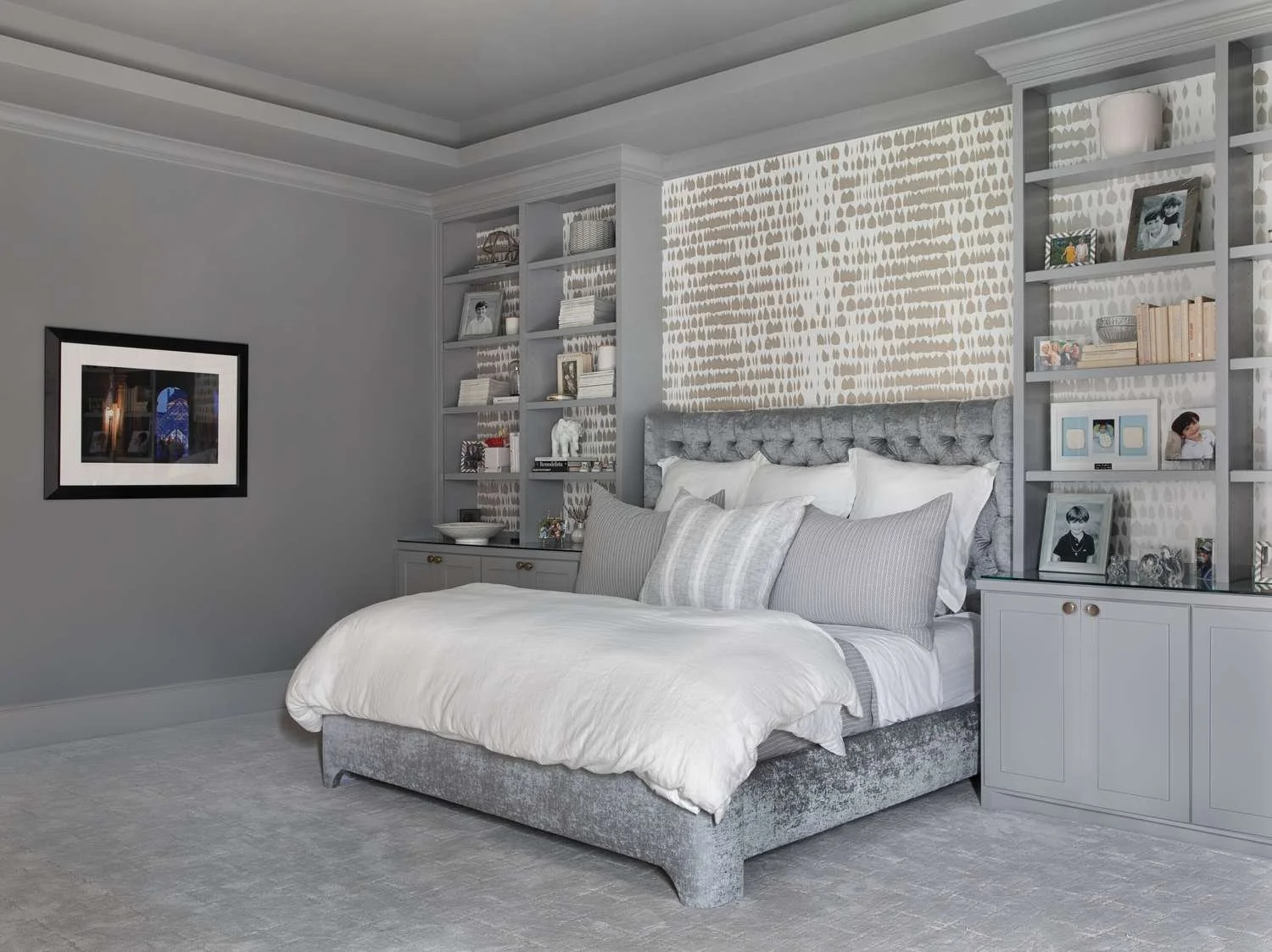
Too much neutral, via MyDomaine
4. Using Generic Artwork
How can you make a vacation rental stand out?
Give guests something to remember.
Artwork is one of the easiest ways to create personality, yet it's often treated as a solution to an empty wall.
The question becomes:
"What will fit here?"
Instead, ask:
"What should this wall say?"
Artwork can reinforce:
The destination
The property's personality
Local character
The color palette
The design concept
A focal point
It doesn't need to be expensive.
It needs to be intentional.
A generic piece of art can make an otherwise attractive property feel interchangeable. A purposeful piece can help establish a sense of place and give guests something they remember.
Scale matters, too.
A large wall generally needs enough visual weight to balance the room. A tiny print floating above a large sofa can make the entire composition feel undersized.
The same principle applies to gallery walls, bedroom artwork, entryways, and other highly visible areas.
Don't use artwork only to fill space. Use it to create identity.
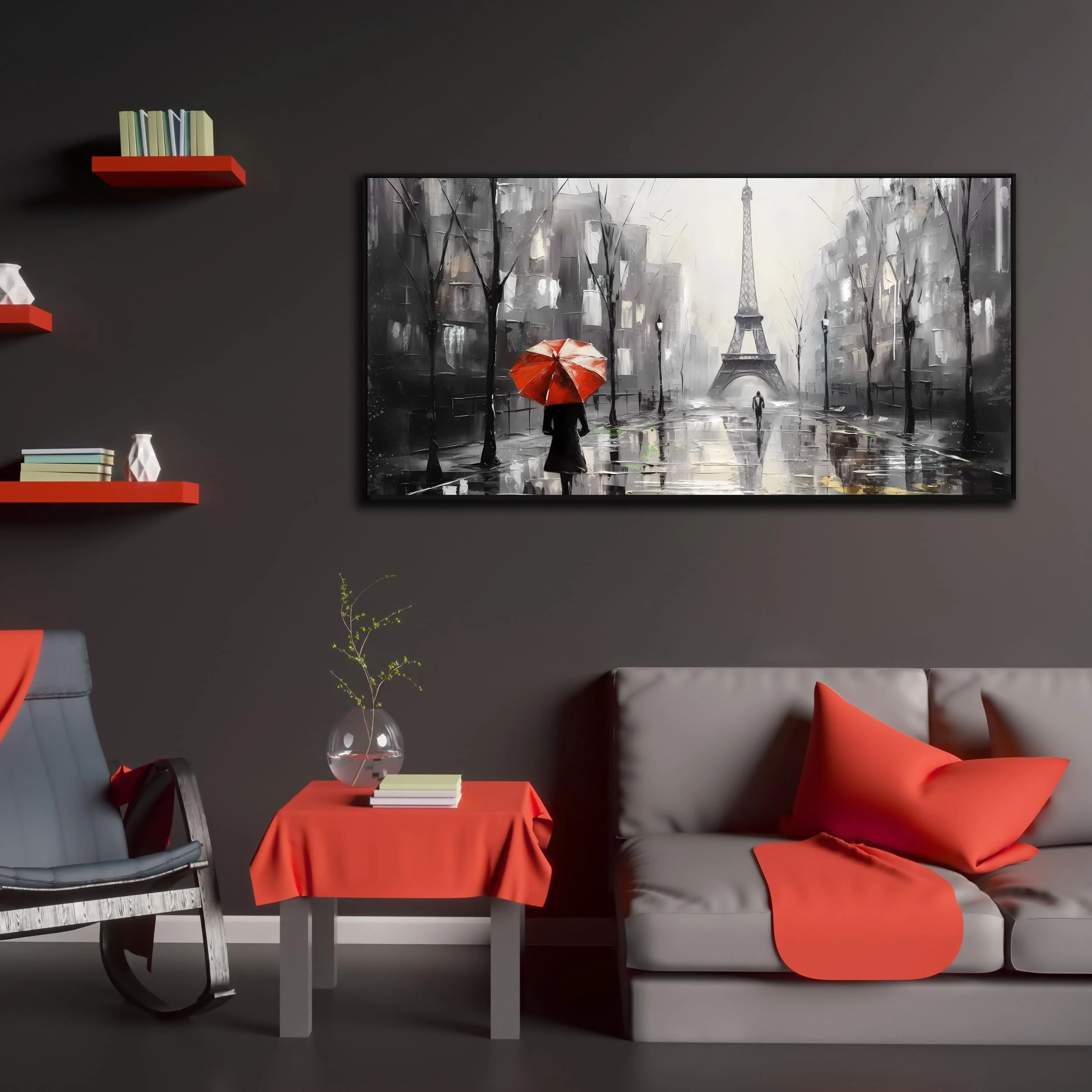
Don’t use Eiffel Tower art if your STR isn’t in Paris—it’s too generic and overused; via Amazon
5. Ignoring Scale, Proportion, and Layout
Why does my STR still look wrong when I bought good furniture?
Because design isn't only about what you buy. It's about how everything relates.
A beautiful rug can be too small.
Great artwork can be hung too high.
A comfortable sofa can be placed in an awkward configuration.
A room can contain excellent furniture and still feel cramped, unbalanced, or unfinished.
Pay attention to:
Scale
Proportion
Spacing
Balance
Traffic flow
Furniture placement
These fundamentals matter even more in an STR because the room needs to work in two places:
In the guest experience and in the listing photograph.
A room can function adequately in person while looking awkward online.
That's a missed opportunity.
Instead of asking:
"Do I like this piece?"
Ask:
"Does this piece work in this room?"
That's how you move from collecting furniture to designing a space.
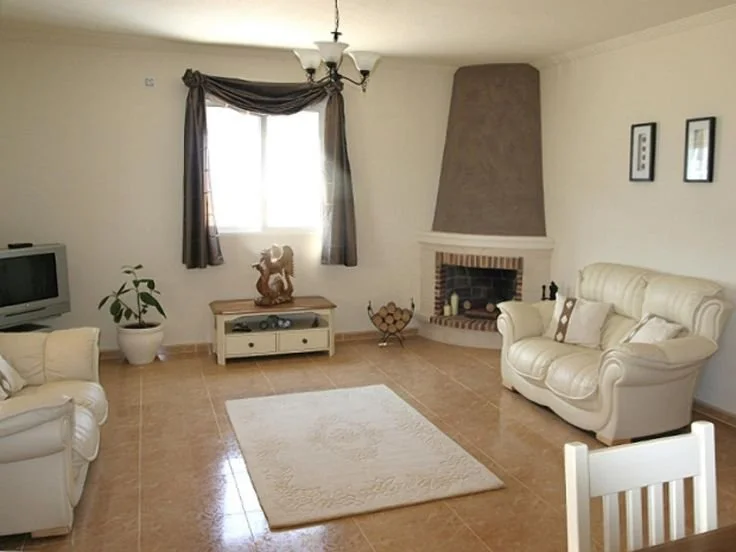
Don’t ignore design rules like scale and furniture arrangement; via Facebook
What Do These Five STR Design Mistakes Have in Common?
The problem isn't that any one of these choices automatically makes an STR look cheap.
The problem is what happens when several of them appear together.
A property with:
Low-quality high-use furniture
No cohesive design plan
Little visual contrast
Generic artwork
Poor scale or layout
can feel less valuable than the amount invested in it would suggest.
Luxury perception is cumulative: It's the impression created by many design decisions working together.
And it explains why an STR doesn't necessarily need a complete makeover to feel more valuable.
Sometimes the biggest opportunity is one sofa.
Sometimes it's the layout.
Sometimes it's artwork.
Sometimes the room needs contrast.
Sometimes the owner simply needs a design plan before buying anything else.
The answer isn't always more stuff.
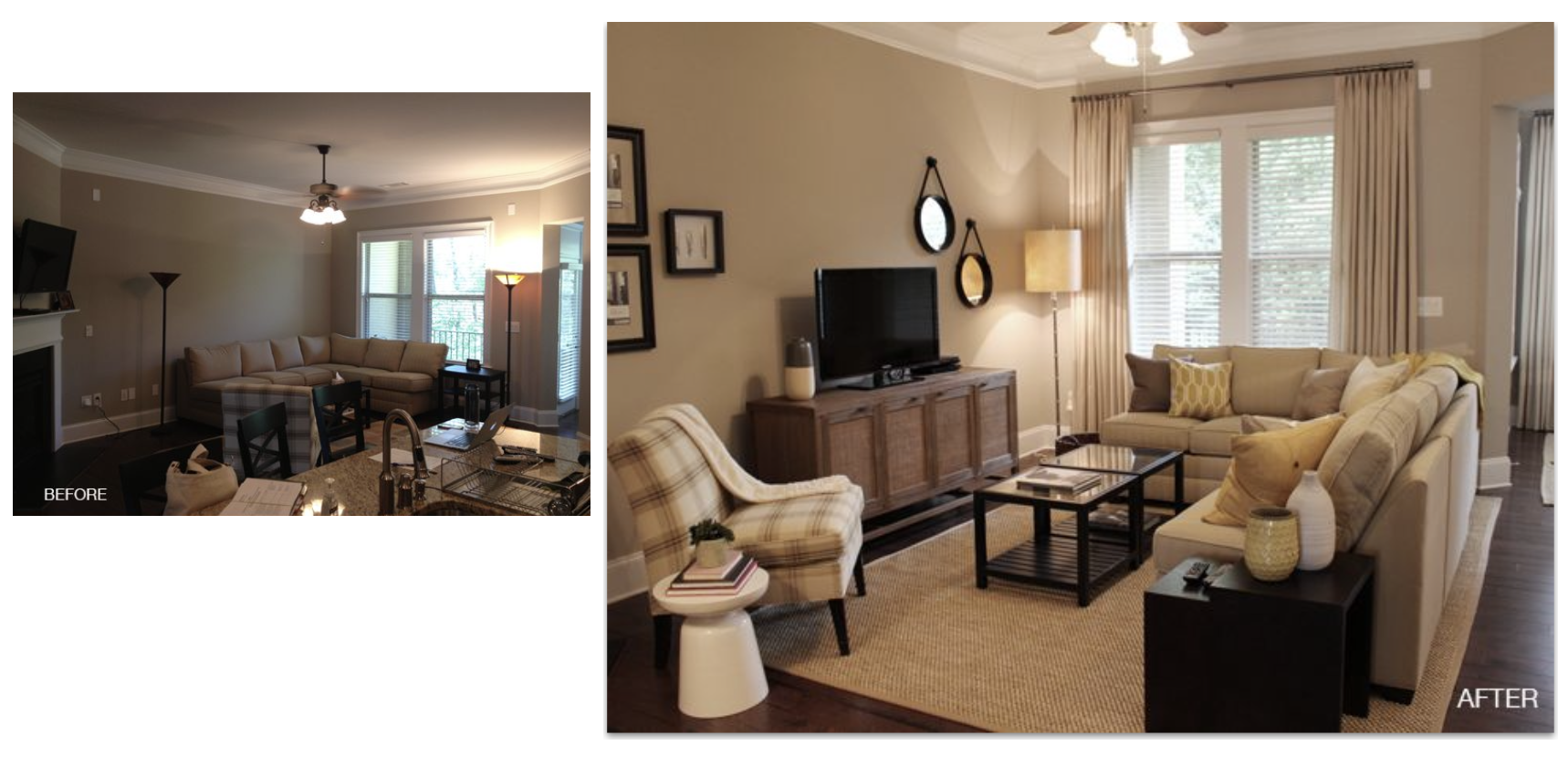
Client had nice furniture—it just needed to be arranged correctly; via VR Decor
Does STR Interior Design Affect ADR?
Interior design can influence perceived value, listing appeal, guest expectations, differentiation, comfort, and the overall guest experience—but it does not guarantee a specific ADR.
My study of 250 STR properties across 10 U.S. markets found that luxury perception was one of three design characteristics strongly correlated with higher nightly rates.
The important word is correlated.
The research does not establish that one design change causes a specific increase in ADR.
ADR is influenced by many factors, including:
Design
Location
Seasonality
Demand
Pricing
Amenities
Reviews
Operations
Property type
Competition
Design is one piece of that larger system.
Its job is to help the property communicate its value.
If you want to charge more than competing properties, the property needs to look and feel like it belongs in that price range.
That doesn't mean an expensive sofa creates a higher ADR.
It means your visual experience should support the price you're asking.
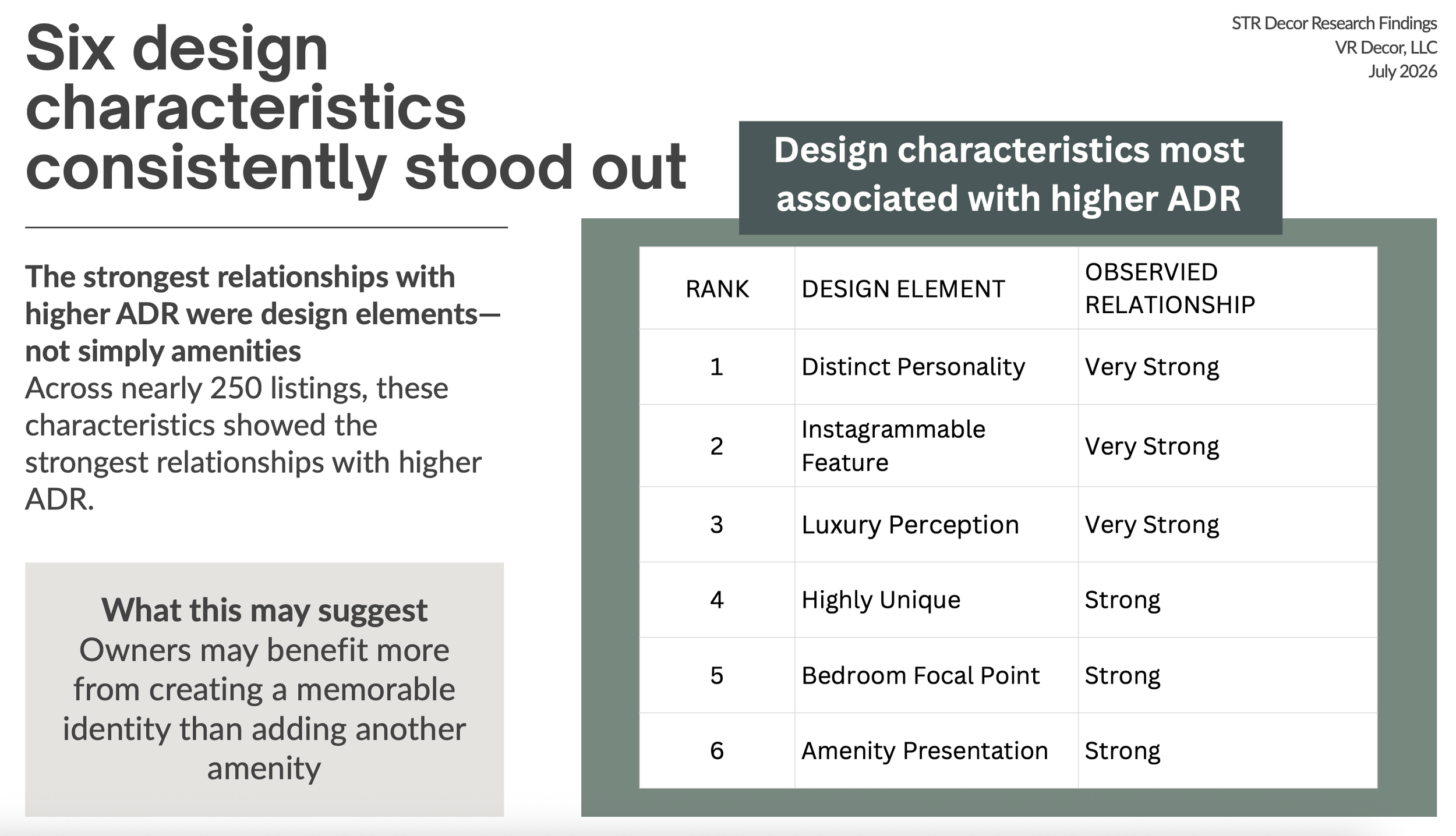
Part of the summary from our study of 250 properties across 10 markets in the U.S.; via VR Decor
What Can Interior Design Fix—and What Can't It Fix?
Interior design can improve how a property looks, feels, functions, and communicates its value.
It cannot fix every problem with an STR.
Design won't overcome:
A poor location
Bad pricing
Weak property management
Poor guest communication
Bad reviews
Lack of important amenities
Weak demand
A market that's already oversupplied
That's important because design should be treated as one part of your property's business strategy, not a substitute for everything else.
If the property is struggling because guests are complaining about cleanliness, adding new artwork isn't the answer.
If you're losing bookings because your pricing is out of step with the market, a new sofa won't solve the problem.
But if the property is performing reasonably well and you're asking whether the space communicates the level of value you're trying to sell, that's where strategic design can matter.
How Can I Make an STR Look More Luxurious Without Spending More?
Before buying anything else, look at how your current budget is working.
Start with five questions.
What does the guest touch?
Prioritize comfort and quality where guests interact with the property for long periods.
What does the guest see first?
Put your strongest visual decisions in the areas that dominate the listing photos and the guest's first impression.
What looks disconnected?
Fix the arrangement of items before buying more.
Where is the contrast?
If everything blends together, introduce definition through color, material, texture, lighting, or furniture.
What makes the property memorable?
Use artwork, destination, color, architecture, or a distinctive design concept to create personality.
And don't overlook the final question:
What can you remove?
Sometimes removing the wrong furniture improves a room more than adding another piece.
This is what I mean by “revenue-driving decor.”
The goal isn't to spend the most.
The goal is to determine WHERE TO SPEND your available budget to create the strongest combination of guest experience, visual appeal, and perceived value.
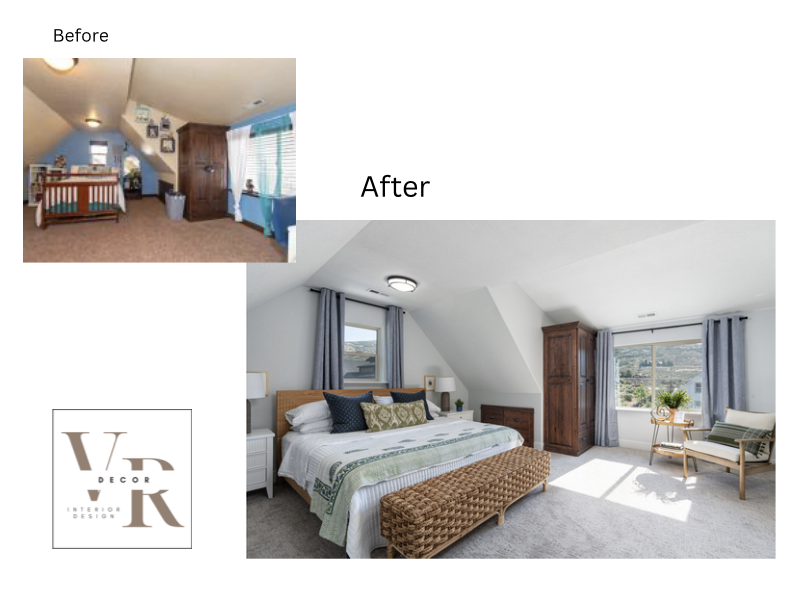
Spend wisely on updates—not necessarily more; Via VR Decor
What Should I Fix First If My STR Looks Cheap?
If your property doesn't feel as valuable as you want it to, don't automatically start shopping.
Diagnose first.
A good priority order is:
1. Fix obvious comfort problems.
If the sofa is uncomfortable or the mattress is poor, address that before decorative upgrades.
2. Correct layout and scale.
Make sure furniture, rugs, artwork, and pathways work together.
3. Create cohesion.
Establish a clear design direction so individual purchases stop competing with each other.
4. Add contrast and personality.
Give the room visual definition and something memorable.
5. Upgrade high-impact visual elements.
Once the fundamentals are right, focus your remaining budget on the pieces that have the greatest effect on the guest experience and listing photos.
6. Only then add more decor.
This order matters.
A property with too much furniture, too many accessories, or too many competing ideas doesn't necessarily need more.
It may need less—but better.
How Can I Audit My STR for Luxury Perception?
You can do this without purchasing anything. Open your listing and look at the property as if you've never seen it before.
Then ask:
Does this look intentional?
Does everything feel connected?
Is there enough contrast?
Is there a clear focal point?
Does the artwork have a purpose?
Is the furniture correctly scaled?
Does the layout work?
Does the room photograph well?
Then ask the question I think is most revealing:
If I didn't know how much this property cost to furnish, what would I assume it cost?
Your potential guest is making a version of this judgment.
They don't see your budget.
They see your result.
Your Decor Is Part of Your Marketing
Your listing photos are often the first sales conversation your property has with a potential guest.
Before they experience your hospitality, they experience your design through a screen.
Your property is communicating:
Quality
Comfort
Personality
Value
Experience
Price positioning
If the design communicates quality and intentionality, it can help establish a stronger perception of value.
That's why I don't think of STR interior design as decoration alone.
Design is part of the sales strategy.
And the strongest design decisions aren't necessarily the most expensive ones.
They're the ones that make sense for the property, the guest, the market, and the budget.
The Bottom Line: Design for Perceived Value, Not Just Cost
Your guests don't experience your furnishing budget.
They experience your design.
If your STR looks cheaper than it should, start by looking for these five problems:
You spent too little where quality matters.
You bought furniture without a cohesive plan.
You made everything neutral without enough contrast.
You used artwork to fill walls instead of create personality.
You overlooked scale, proportion, or layout.
Then ask one final question:
Does my property look worth what I'm charging?
That's the luxury perception test.
You don't always need to spend more to improve the answer.
You need to design more intentionally.
And if you're deciding whether to replace a sofa, change a layout, add color, invest in artwork, or redesign the entire property, start with the same question:
What change will make the biggest difference to the guest experience and the property's perceived value?
That's where strategic STR interior design earns its place—not by making a property look expensive, but by making the right investment look and feel valuable.
Frequently Asked Questions
Why does my Airbnb look cheap even though I spent a lot?
An Airbnb can look inexpensive when the individual purchases don't create a cohesive, intentional result. Guests see the finished space rather than the furnishing receipts, so quality, contrast, artwork, scale, layout, and overall cohesion all influence perceived value.
How can I make my vacation rental look more expensive?
Focus on the overall composition before adding more products. Invest in high-use furnishings, create a design plan, add intentional contrast, use artwork to establish personality, and correct scale and layout.
Where should I spend money when furnishing an STR?
Prioritize items guests use frequently and where quality affects comfort, durability, or the physical experience. Sofas, mattresses, beds, dining chairs, outdoor furniture, and other high-use items often deserve more attention than decorative accessories.
How can I make an STR look luxurious without spending more?
Use your existing budget more strategically. Improve cohesion, contrast, artwork, furniture placement, and scale before assuming you need additional furnishings.
What design mistakes lower an Airbnb's perceived value?
Common mistakes include buying cheap where quality matters, furnishing without a plan, making everything neutral, using generic artwork, and overlooking scale, proportion, spacing, balance, and traffic flow.
Does interior design affect STR ADR?
Design can influence perceived value and the guest experience, but it does not guarantee a specific ADR. A study of 250 STR properties across 10 U.S. markets found luxury perception was among the design characteristics strongly correlated with higher nightly rates. The study did not establish a specific causal revenue result.
How can I make my vacation rental stand out?
Give the property a clear point of view. Intentional artwork, destination-specific details, contrast, a distinctive focal point, and cohesive design can make a vacation rental more memorable than one built from generic furnishings.
Should I spend more money or hire an interior designer for my STR?
Not necessarily. The first question should be whether you have a clear design strategy. If the problem is poor cohesion, scale, layout, or budget allocation, a design strategy can be more valuable than simply buying more expensive products.
What should I fix first if my Airbnb looks cheap?
Start with comfort and function, then address scale and layout, cohesion, contrast, and personality. Only after those fundamentals are working should you add more decorative items.
Can an STR look luxurious without expensive furniture?
Yes. Luxury perception comes from how quality, cohesion, contrast, personality, scale, and layout work together—not simply from the price of individual furnishings.
All best wishes with your STR! Warmly,
Cara Shimizu
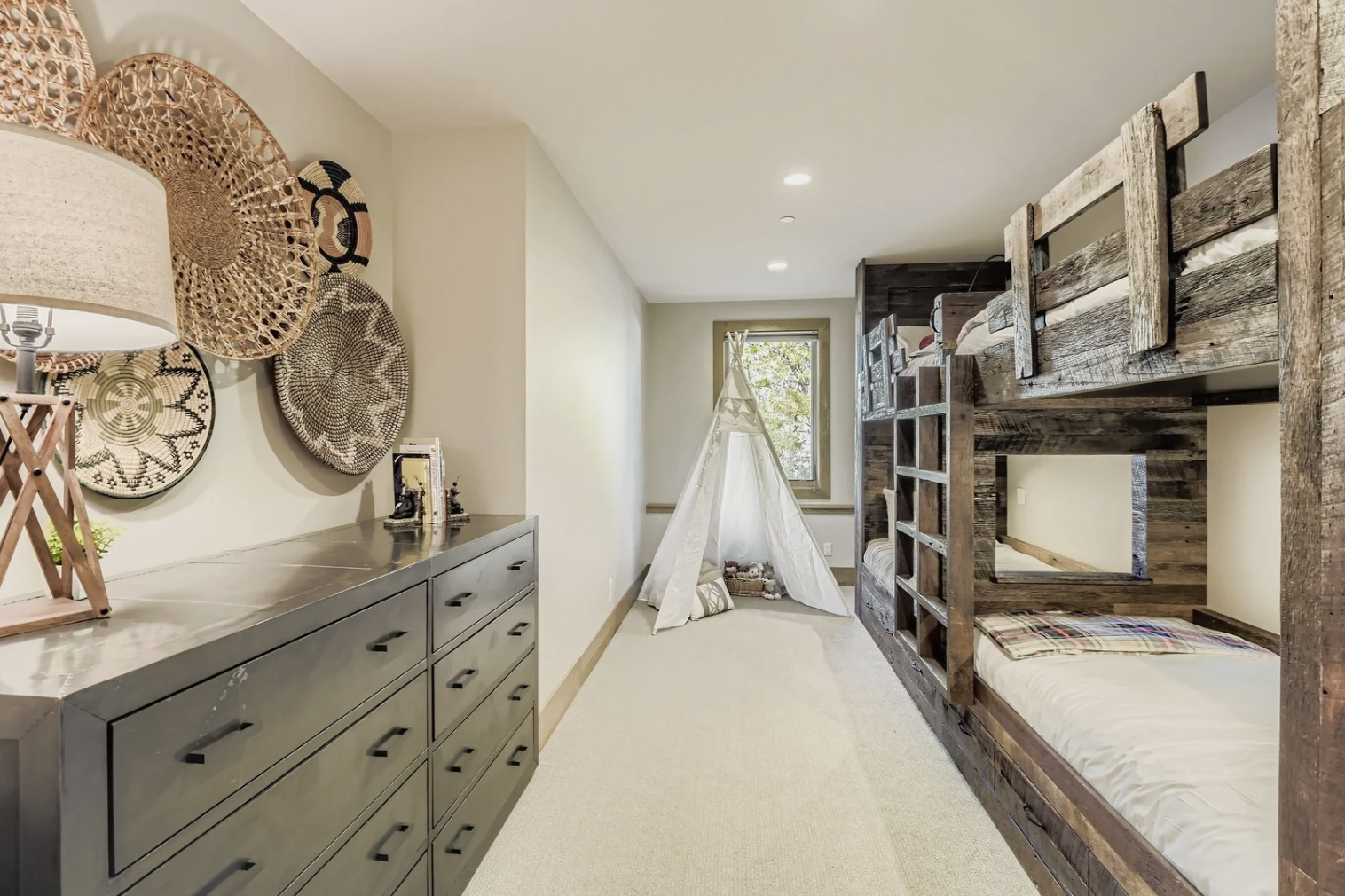
Luxury Property in Park City, Utah; Designed by VR Decor