Should You Hire an Interior Designer for Your Airbnb, or Decorate It Yourself?
If you' own a vacation rental, this is one of the biggest decisions you'll make, because your decor is marketing—for better or worse
TLDR: Hiring an STR interior designer may be worth it if you're furnishing a property from scratch, managing multiple rooms, or struggling to create a distinctive, guest-ready space. DIY may make more sense if you have a limited budget, enjoy decorating, and have the time and skills to manage the project yourself.
Neither option is right for every property owner.
The best choice depends on your budget, your time, your design skills, and what you want your property to accomplish.
Let's compare the real costs, benefits, drawbacks, and options so you can decide what's right for your short-term rental.
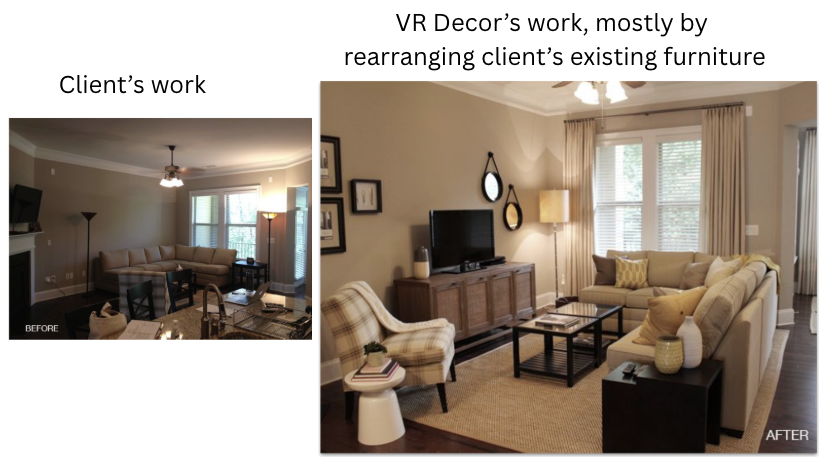
(Above images by VR Decor)
1. How much does it cost to hire an interior designer for an AirBnb?
Hiring an interior designer adds a professional design fee to your furnishing budget. The total cost depends on the number of rooms, the level of service, the furnishings you select, and how much help you need (or want) with implementation.
Here are the 2 main design options I offer at VR Decor:

These are design fees, and doesn’t include the price of furniture for decorating a property.
Furniture, decor, shipping, installation, and other project expenses are separate unless specifically included in the project agreement.
What makes Airbnb interior design more expensive?
Several factors affect the total investment:
Number of rooms: A property with five bedrooms and multiple common areas requires more design work than a one-bedroom rental.
Starting condition: Furnishing an empty property generally requires more decisions and purchases than refreshing an already furnished space.
Furniture and materials: The quality, durability, and style of the items you choose affect the budget.
Level of service: A design plan costs less than a service that includes more hands-on project support.
Property requirements: Unique layouts, special amenities, and complex projects can add time and expense.
Is hiring a designer more expensive than DIY?
Yes, in terms of direct design fees. When you decorate yourself, you avoid paying a professional design fee.
However, DIY still involves the cost of furniture, decor, delivery, assembly, and your time. If you make expensive mistakes or need to replace items that don't work, your savings may shrink.
The question is whether professional guidance is worth the additional cost for your particular property.
2. What Are the Pros and Cons of Decorating Your Airbnb Yourself?
DIY can be a sensible choice, especially if you enjoy decorating and have the time to manage the project.
But it also comes with responsibilities that are easy to underestimate.
The advantages of DIY
You avoid a professional design fee.
This is the most obvious benefit. You can put that money toward furniture, lighting, artwork, or other improvements.
You have control over every decision.
You choose the furniture, colors, materials, and overall look of the property.
You can work at your own pace.
You can spread purchases out over time, shop for deals, and complete the project in stages.
You can use your own design skills.
If you have a strong eye for design and enjoy the process, you may be able to create a cohesive, attractive space without professional help.
The disadvantages of DIY
You have to make every design decision.
You are responsible for measuring, planning layouts, selecting products, and making sure everything works together.
The project can take a lot of time.
Researching products, comparing prices, coordinating deliveries, and assembling furniture can take weeks or longer.
You may make costly mistakes.
Furniture that doesn't fit, rugs that are too small, or lighting that doesn't work well can require additional spending.
The finished property may not look the way you envisioned.
Individual purchases can look good on their own but still fail to create a cohesive, distinctive space.
You are responsible for solving problems.
Damaged items, shipping delays, returns, and installation issues all become your responsibility.
DIY can work well, but you need to be realistic about the time, effort, and design decisions involved.
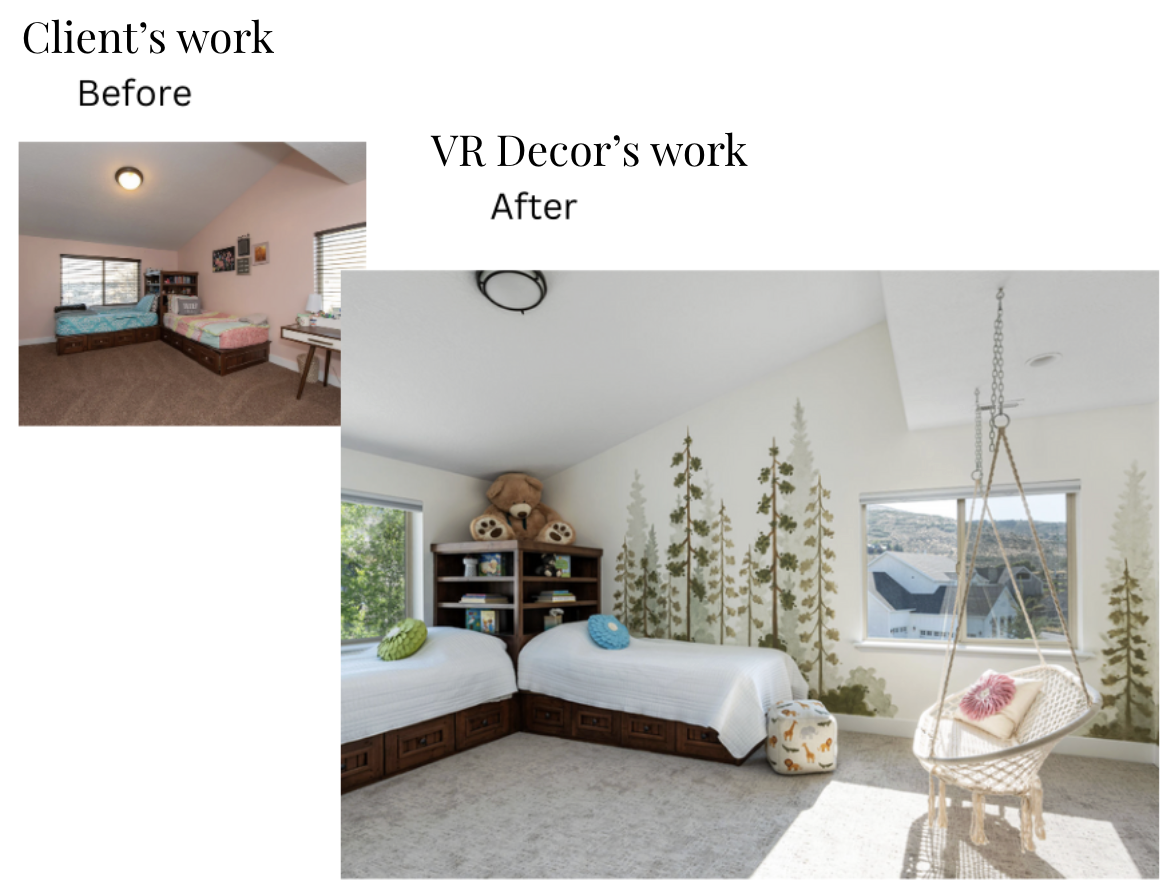
(Above images via VR Decor)
3. What Are the Pros and Cons of Hiring an Interior Designer?
Hiring a designer means paying for professional guidance and a more structured approach to furnishing your property.
It can reduce the number of decisions you have to make, but it is not automatically the right choice for every owner.
The advantages of hiring a designer
You get a cohesive design plan.
Instead of buying items one at a time and hoping they work together, you begin with a clear direction for the entire space.
You get help making design decisions.
A designer considers scale, layout, color, lighting, furnishings, and how the pieces work together.
You can reduce the time spent researching and shopping.
The designer narrows down the choices and provides recommendations based on the agreed design and budget.
You may avoid expensive design mistakes.
Thoughtful planning can help prevent problems such as poorly sized furniture, disconnected decor, and rooms that feel unfinished.
You can create a more distinctive property.
For an STR, a designer can help develop a visual identity that makes the property easier to recognize and remember.
The disadvantages of hiring a designer
You pay an additional fee.
Professional design is an investment, and the fee may be difficult to justify for a small or simple project.
You still have to make decisions.
You need to approve the budget, provide feedback, and make key choices throughout the process.
The designer's style may not match your vision.
A designer's portfolio and process matter. You need someone who understands your goals and can design for your target guest rather than simply impose a personal style.
The scope of service may be limited.
Some designers provide plans and shopping links but leave purchasing and installation to the owner. Others offer more hands-on support. When hiring a designer, understand exactly what is included.
Design does not guarantee higher revenue.
A well-designed property may improve its appeal and perceived value, but it cannot guarantee more bookings, higher nightly rates, or a specific return on investment.
Hiring a designer makes the most sense when the benefits of professional guidance justify the fee and the responsibilities you still need to manage.
4. DIY vs. Hiring a Designer: Which Option Is Better for Your Airbnb?
The right choice depends on what matters most to you.
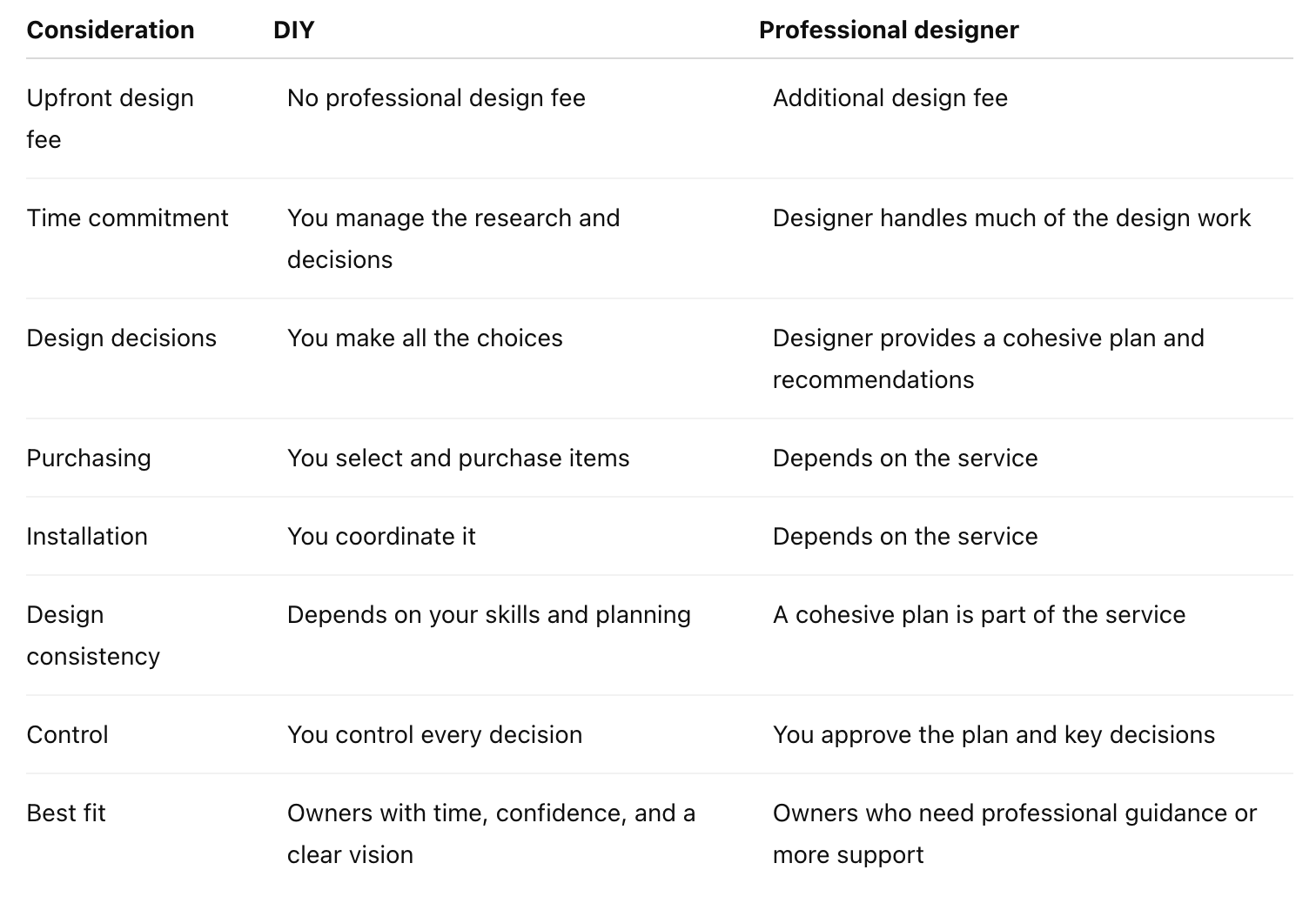
The bottom line: DIY gives you more control and avoids a design fee, while hiring a designer gives you professional guidance, can reduce the time and effort required to make design decisions, plus save you money!
5. Can Hiring an Interior Designer Help Your Airbnb Make More Money?
It can contribute to a property's appeal and perceived value, but it cannot guarantee higher revenue.
If your property is an investment, the goal isn't simply to make it look attractive. You want to create a space that appeals to your target guest and supports your business goals.
Design can influence several parts of that experience.
A distinctive property may attract more attention
When potential guests compare listings, a property with a recognizable visual identity may stand out more clearly than one that looks like many others.
Distinctive design can help your property become more memorable.
A thoughtfully designed space may communicate greater value
Furniture, lighting, materials, and styling all contribute to the way a property is perceived.
A space that feels intentional and well-furnished may better support the experience you're promising guests.
Good design can support the guest experience
Comfortable seating, functional layouts, appropriate lighting, and well-planned bedrooms can make a property more enjoyable to use.
That matters because guest satisfaction is influenced by more than appearance alone.
But design is only one part of revenue performance
A beautiful property can still struggle if it is in the wrong market, priced incorrectly, poorly marketed, or lacking the amenities guests expect.
Location, pricing, reviews, amenities, listing quality, and demand all matter.
This is why I approach STR design as a business decision, not just a decorating project.
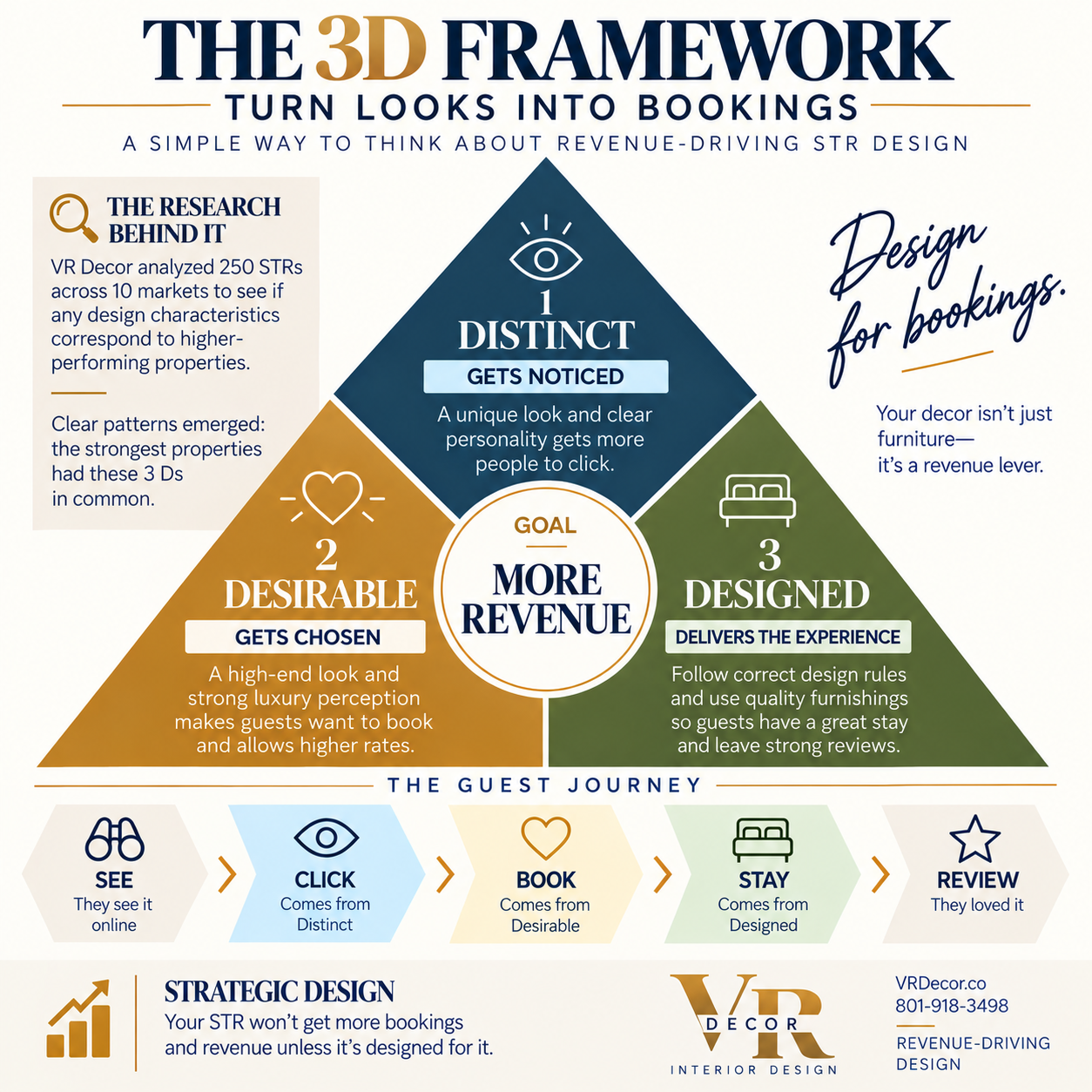
My 3D Framework for Revenue-Driving Design focuses on 3 goals:
Distinct: Give guests a reason to notice and remember your property.
Desirable: Create a space that communicates quality and perceived value.
Designed: Plan the property for comfort, function, and the guest experience.
The objective is to make design decisions that support your business goals—not to promise that a particular decorating choice will produce a specific financial result.
6. What Are the Most Common Mistakes When Decorating an Airbnb Yourself?
DIY mistakes often happen when owners focus on individual purchases instead of the finished space. There’s a looooot to think about when decorating an AirBnb!
Here are some of the problems to watch for:
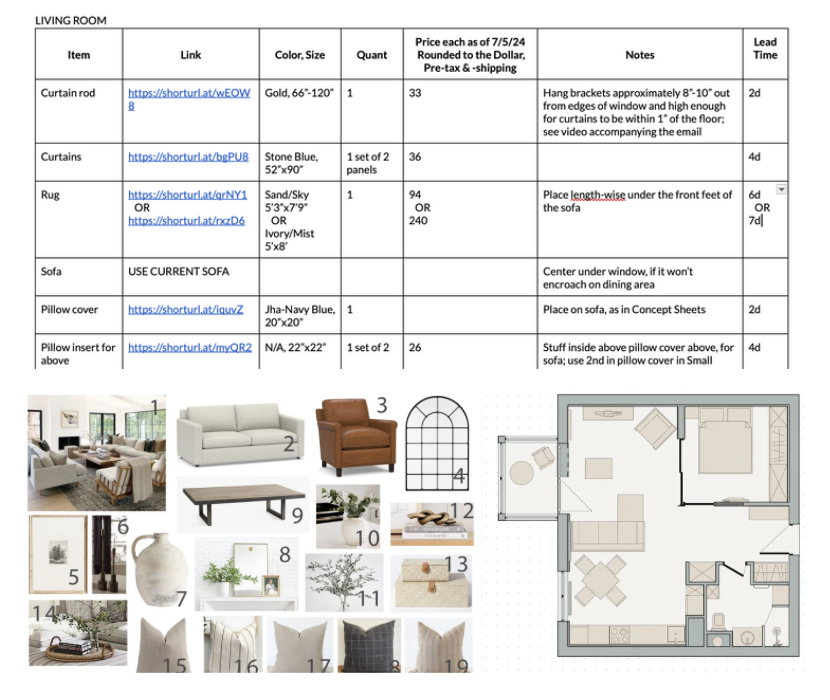
Buying furniture before choosing the design direction AND planning the layout
A sofa may look perfect online but overwhelm the room once it arrives.
Measure the space and plan furniture placement before buying large items.
Choosing pieces that don't work together
A beautiful rug, sofa, and artwork can still create a disconnected room if their colors, scale, and style don't complement one another.
Think about the entire room before making individual purchases.
Choosing furniture that's too small
Undersized rugs, small artwork, and insufficient lighting can make a room feel unfinished.
Pay attention to scale and proportion.
Creating a generic look
A property furnished with the same widely available items as every other rental may struggle to establish a distinctive identity.
Consider what makes your location, property, or target guest different.
Overlooking comfort and function
A room may photograph well but still be uncomfortable or impractical.
Make sure there is enough seating, useful lighting, convenient surfaces, and a functional layout.
Spending money without a clear plan
Buying items as you find them can lead to unnecessary purchases and a room that never quite comes together.
Set a budget, establish a design direction, and prioritize the items that matter most.
These mistakes are avoidable, but preventing them requires excellent planning and a clear understanding of how the space should function.
(above image by VR Decor)
7. When Should You Decorate Your Airbnb Yourself?
DIY may be the right choice if:
You have a limited budget. You may need to prioritize essential furnishings and improvements before investing in professional design.
You enjoy decorating. You have the time and interest to research products, compare options, and make decisions.
The project is relatively simple. A straightforward room refresh may not require extensive professional support.
You already have a clear design plan. You know what you want and feel confident executing it.
You want complete control. You prefer to make every decision and manage the project yourself.
DIY makes the most sense when you have the resources and confidence to produce the result you want without extensive professional help.
8. When Is Hiring an Interior Designer Worth It?
Professional design may be worth considering when the project is complex, your time is limited, or the finished property needs to accomplish something specific.
You're furnishing a property from scratch
Starting with an empty property means making many decisions at once.
A designer can help you establish a cohesive plan before you begin spending money.
Your property looks generic
If your listing looks similar to competing properties, thoughtful design may help you establish a more distinctive visual identity.
You're investing in a higher-end property
When guests are paying a premium, the design and presentation need to support the experience you're promising.
You're managing multiple properties
The time required to make hundreds of design decisions can add up quickly.
A designer can help you establish a more efficient process and a consistent standard across your properties.
You don't have the time or interest to manage the project
If decorating feels like another job, professional support may be worth the investment.
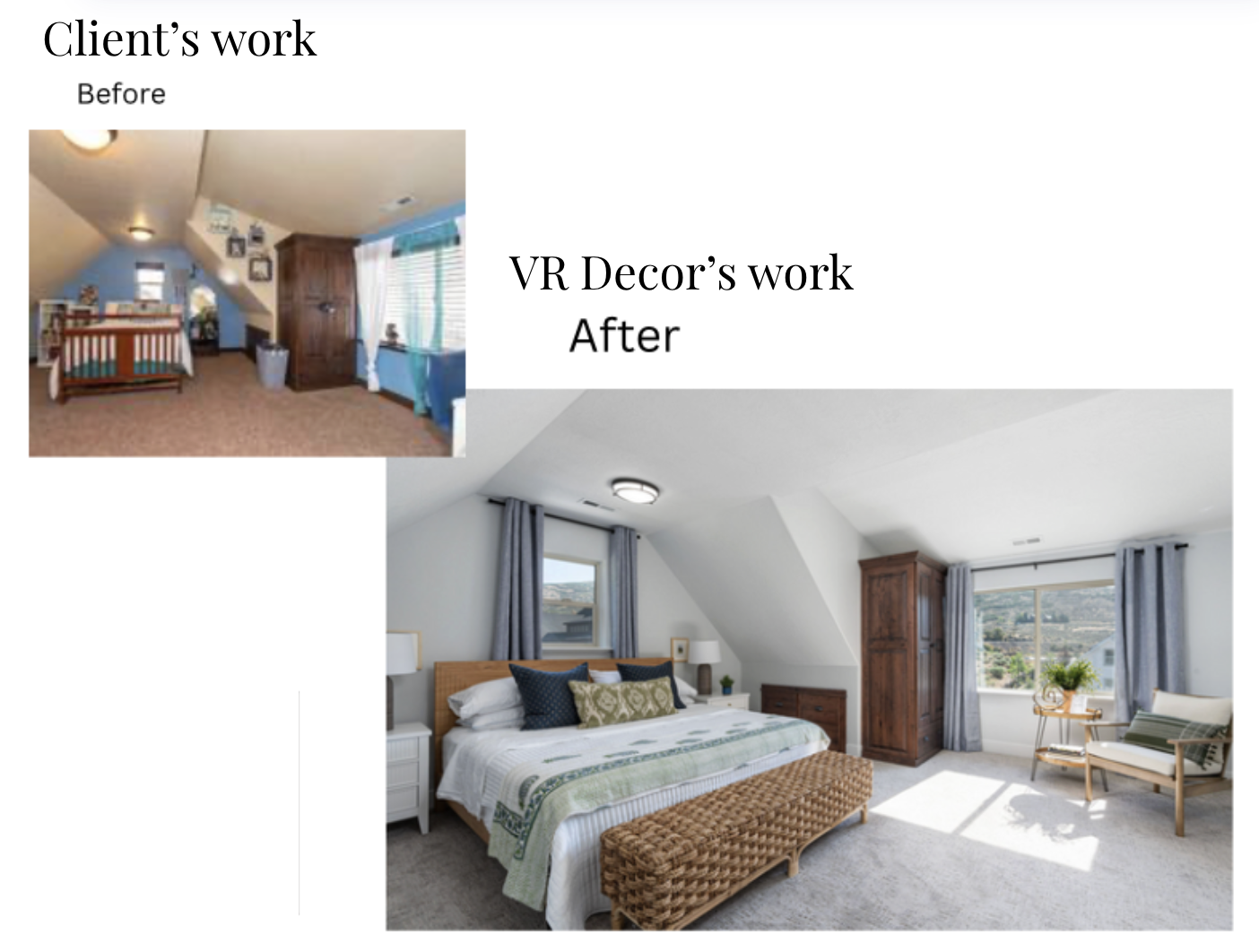
You've tried DIY and aren't getting the result you want
If you've spent money on furniture and decor but the property still feels unfinished or underwhelming, a professional perspective can help identify what isn't working.
(Above images via VR Decor)
9. What Is the Difference Between E-Design and Full-Service Interior Design?
E-Design provides professional design guidance while leaving purchasing and implementation to you. Full-service design involves a greater level of hands-on support, depending on the project agreement.
You don't have to choose between doing everything yourself and handing over the entire project.
At VR Decor, I offer two main options.
E-Design: Professional guidance, with you in control
My E-Design service costs $950 per space.
It includes:
A customized design plan.
Product selections and clickable shopping links.
30 minutes of follow-up support per room.
You handle purchasing, deliveries, and installation.
E-Design is a good fit for owners who want professional guidance but are comfortable managing the implementation themselves.
Full-Service Makeover: More hands-on design support
My Full-Service Makeover is for owners who want more help transforming their property.
Full-service makeover design fees have been structured at approximately $2,400 per room, with the total investment depending on the project.
Furniture, decor, installation, and other expenses are separate unless included in the project agreement.
The specific scope of design and coordination is established for each project.
Which service should you choose?
Choose E-Design if you want a professional plan and are prepared to manage the purchasing and implementation.
Consider Full-Service Makeover if you want a greater level of design involvement and support.
The right choice depends on your budget, the complexity of your project, and how much of the work you want to manage yourself.
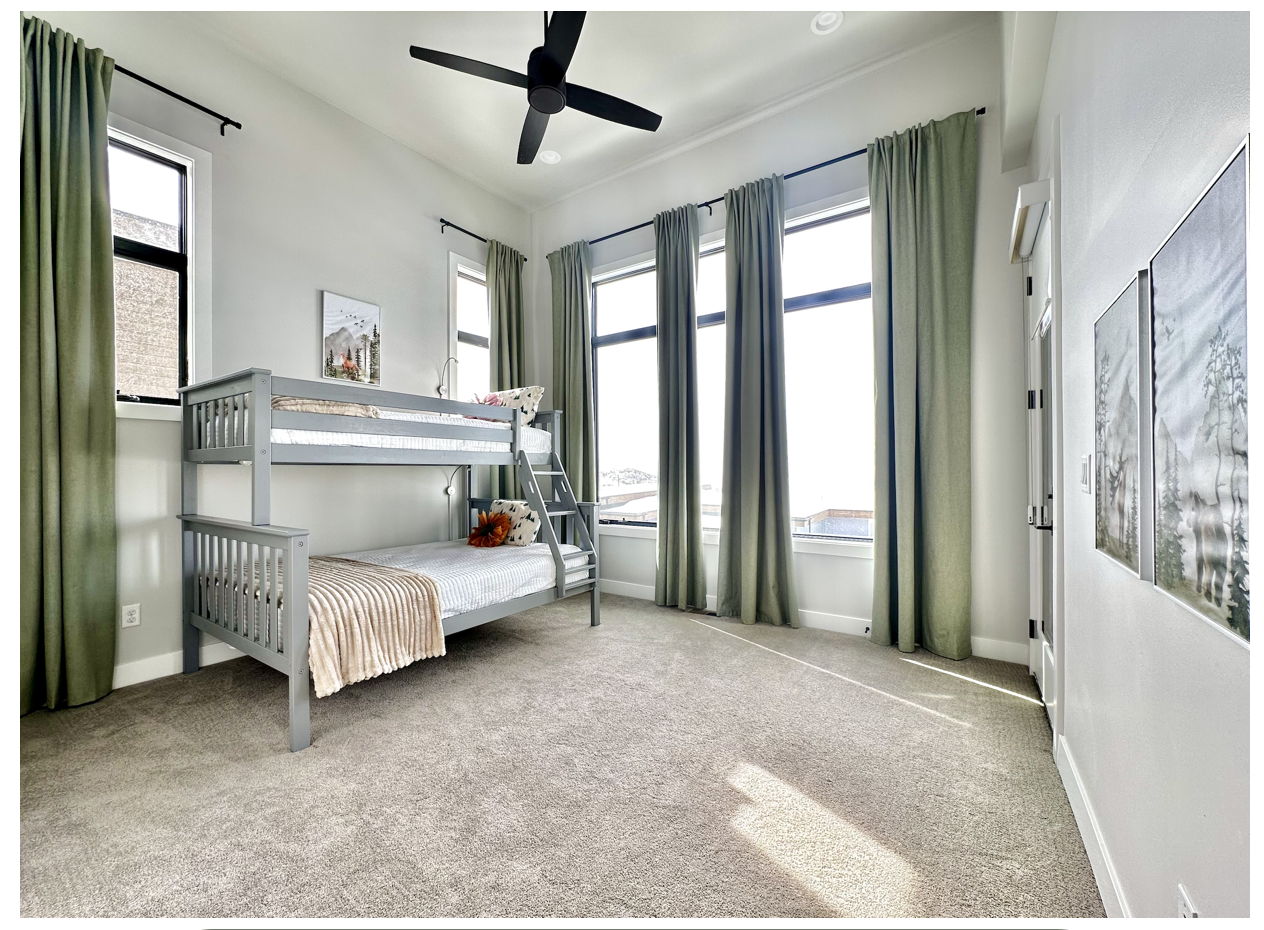
(Above image via VR Decor)
10. How Do You Choose the Right Interior Designer for Your Airbnb?
Most interior designers don’t specialize in AirBnbs.
Before hiring someone, ask questions that help you understand their experience, process, and the value they can provide.
Questions to ask before hiring
1. Do you have experience designing short-term rentals?
Ask to see examples of vacation rentals or investment properties the designer has worked on.
2. How do you design for my target guest?
A property aimed at families may need a different approach from one designed for couples or business travelers.
3. What is included in your fee?
Ask whether the service includes design plans, product selections, purchasing, delivery coordination, installation, or follow-up support.
4. What is not included?
Understand which responsibilities remain yours and which may involve additional fees.
5. How do you work within a budget?
Ask how the designer prioritizes purchases and handles changes if the budget shifts.
6. How do you approach design for a property's business goals?
A designer should be able to explain how the design choices relate to the target guest, listing presentation, comfort, and perceived value.
7. Can you share client references or project examples?
Look for examples that demonstrate the designer's process and the finished work. If business results are discussed, ask how those results were measured and what other factors may have contributed.
The goal is to find a designer whose experience, process, and services match your project.
11. How Do You Decide Whether to DIY or Hire a Designer?
Before making a decision, ask yourself these five questions.
1. Do I have the time to manage the project?
If you have a busy schedule, the time required for research, purchasing, and coordination may be a major factor.
2. Am I confident in my design decisions?
If you're unsure how to create a cohesive, distinctive space, professional guidance may help.
3. Is this a simple refresh or a major furnishing project?
The more complex the project, the more decisions you need to make.
4. What am I trying to accomplish with this property?
Think about your target guest, your market, your desired nightly rate, and the experience you want to deliver.
Frequently Asked Questions About Airbnb Interior Design
Is it worth hiring an interior designer for an Airbnb?
It’s probably worth it if you need help furnishing a property, creating a distinctive look, or managing a complex project. DIY may make more sense if you have the time, skills, and budget to handle the work yourself. A designer's fee should be weighed against the time saved, the design support provided, and the finished result.
How much does an Airbnb interior designer cost?
At VR Decor, E-Design costs $950 per space, and Full-Service Makeover design fees have been structured at approximately $2,400 per room, depending on the project. These are design fees, not total furnishing costs. Furniture, decor, shipping, installation, and other expenses may be separate.
Can I decorate my Airbnb myself?
Yes. DIY can work well if you enjoy decorating, have a clear vision, and can manage the time and huge number of decisions involved. The main challenges are creating a cohesive design, selecting appropriately sized furnishings, and coordinating purchases and installation.
Does interior design increase Airbnb revenue?
In my experience, yes. For other interior designers’ work, I don’t know. Strategic interior design can contribute to a property's appeal and perceived value, but it cannot guarantee higher revenue. Location, pricing, demand, reviews, amenities, and listing quality also influence performance.
What is the difference between E-Design and full-service interior design?
E-Design provides a professional design plan and product recommendations, while the owner handles purchasing and implementation. Full-service design involves a greater level of hands-on support, depending on the scope of the project.
How long does it take to furnish a vacation rental?
The timeline depends on the size of the property, the number of rooms, product availability, delivery schedules, and the amount of work required. A simple refresh may take less time than furnishing an empty property from scratch. Ask your designer for a project-specific timeline.
What should I prioritize when furnishing a vacation rental?
Start with the needs of your target guest, the property's layout, essential furnishings, comfort, and durability. Then consider the visual identity and details that make the property distinctive. Set a budget before purchasing items.
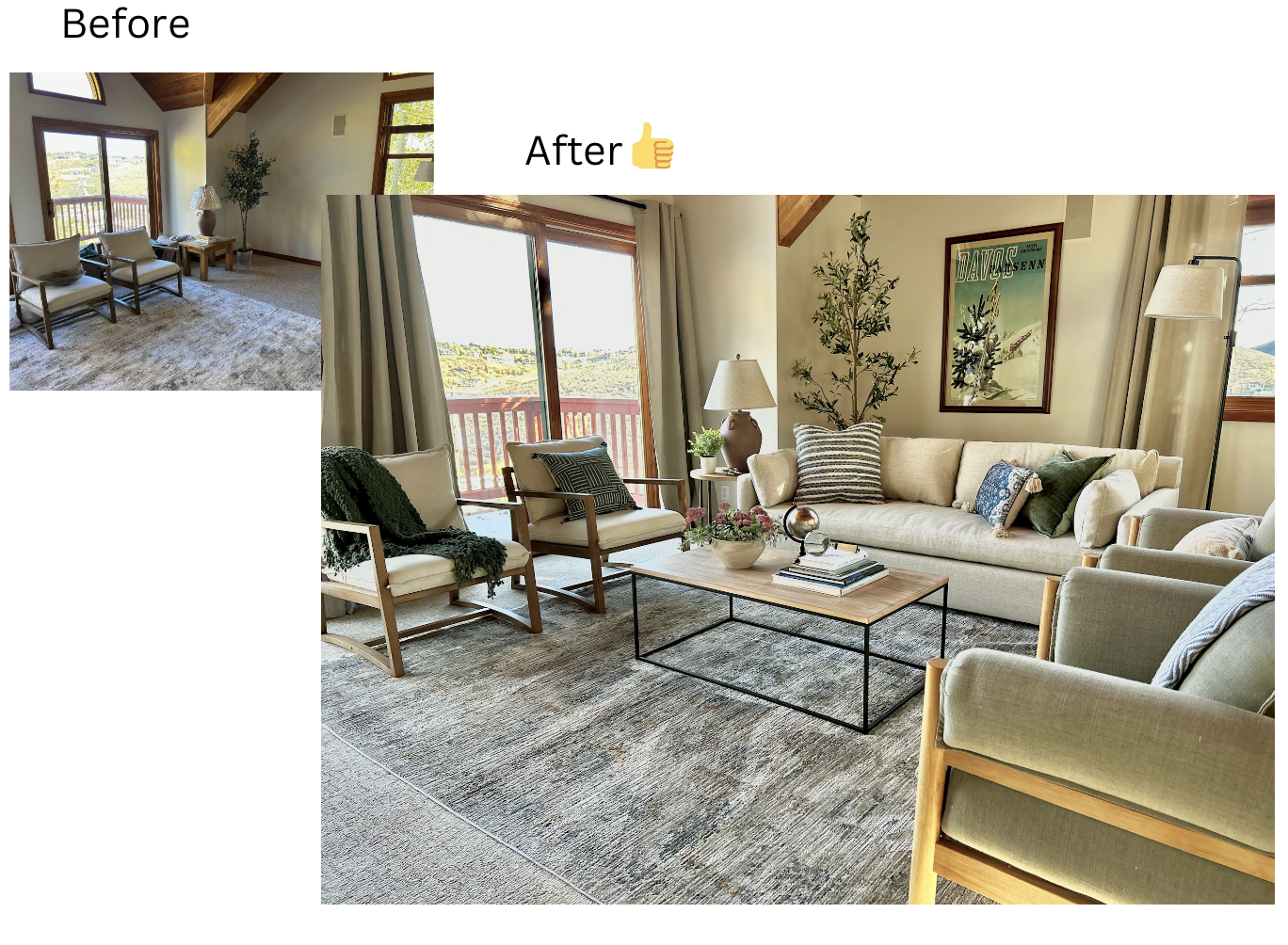
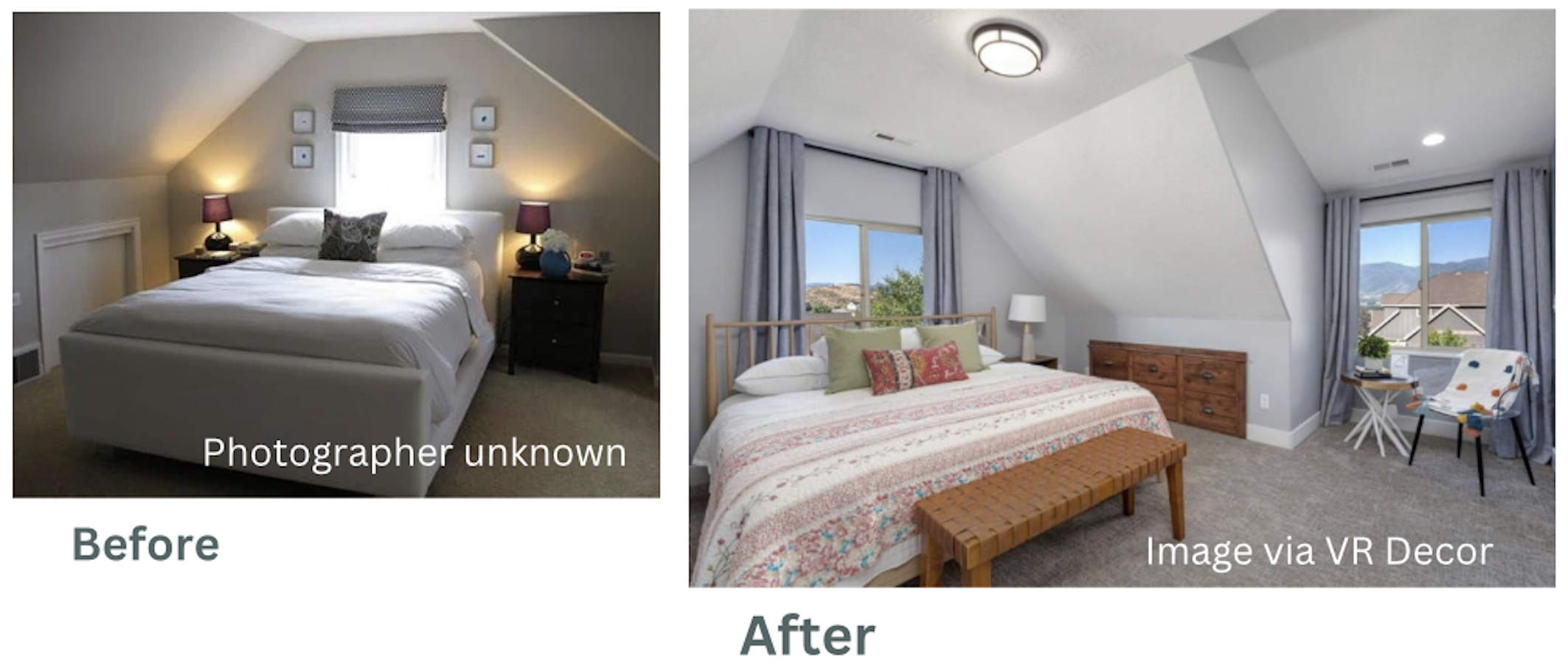
(Images above via VR Decor)
The Bottom Line: DIY or Hire a Designer?
There isn't one right answer for every STR owner.
If you enjoy decorating, have the time, and feel confident making strategic design decisions that will promote more bookings and revenue, DIY may be a sensible choice.
If you're furnishing a complex property, struggling to create a distinctive look, or simply don't have the time to manage the project, hiring a designer may be worth the investment.
And if you want professional guidance—a detailed plan with all info needed to set up your AirBnb as if I were there with you—E-Design offers a could be a good fit.
The important thing is to make a deliberate decision about how you want to invest your money, time, and effort.
At VR Decor, I help STR owners create properties that are Distinct, Desirable, and Designed to support their business goals.