Does Interior Design Really Increase Vacation Rental Revenue?What I Learned From Studying 250 STRs
Every vacation rental owner wants the same thing: more bookings, higher nightly rates, and stronger returns.
To get there, owners spend countless hours optimizing their pricing, writing better listing descriptions, improving SEO, responding to reviews, and adding amenities. Those strategies absolutely matter.
But they all depend on one thing happening first:
A guest has to choose your listing.
And that raises an important question:
What makes someone click on one property instead of another?
My belief has always been simple:
Guests book with their eyes first.
But beliefs aren't enough. I wanted evidence.
So I analyzed 250 short-term rentals across multiple U.S. vacation markets, looking for the design characteristics that appeared most often among higher-performing properties. I wasn't trying to prove my own ideas right. In fact, I expected some of them to be wrong.
They were.
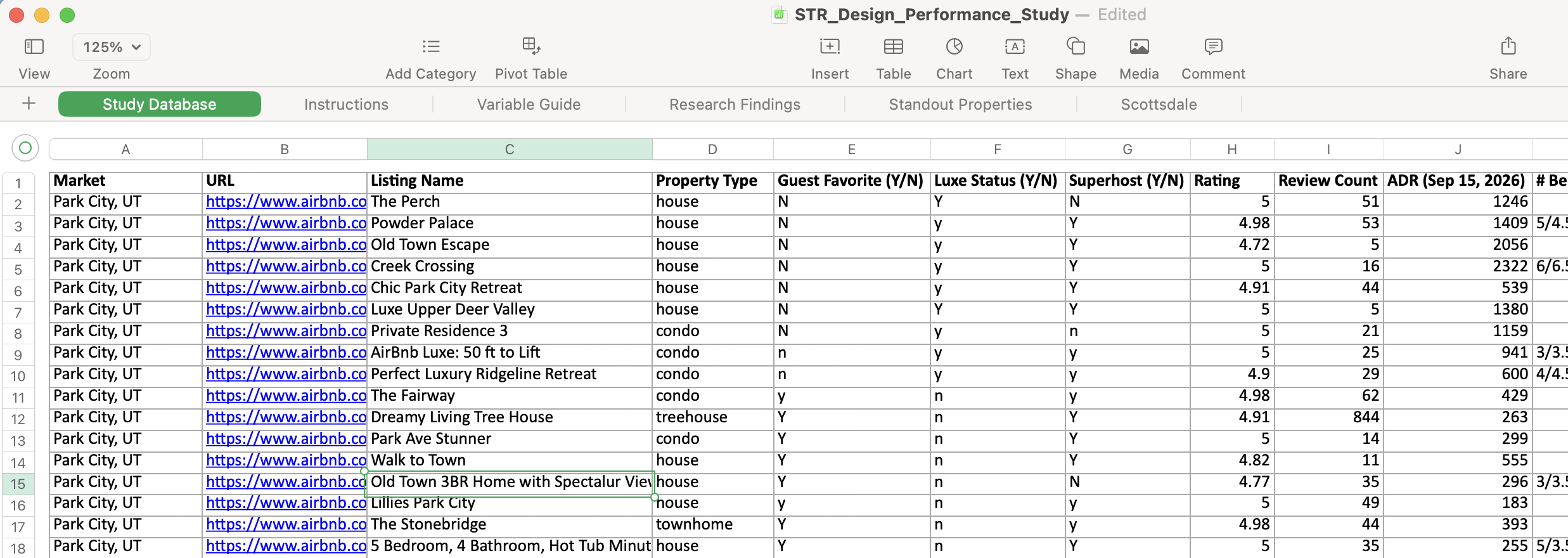
The results changed how I think about decorating STRs forever.
More importantly, they reinforced one conclusion I now believe with confidence:
Design isn't furniture. It's a revenue strategy.
The Biggest Mistake STR Owners Make
Many owners assume they'll earn more money if they optimize their listing.
They improve the title.
Rewrite the description.
Install dynamic pricing software.
Add amenities.
While those improvements help, they all overlook one critical moment in the guest's decision-making process.
When someone searches Airbnb or Vrbo, people aren't reading descriptions first…they're scanning photos.
Within seconds, they're deciding: "Does this property look interesting enough to click?"
If the answer is no, nothing else matters.
Your carefully written listing description may never be read.
Your five-star reviews may never be seen.
Your amenities may never be discovered.
That's why I often say:
Design is your first salesperson.
—> It works long before a guest reads a single word.
Why I Started This Research
Like many designers, I had theories.
One of my own frameworks was something I called the Homey Trinity:
White walls
Intentional color
An Instagrammable feature
I believed these elements helped properties stand out online while creating memorable guest experiences.
But I didn't want to rely on what I had seen just in my own work.
I wanted more data.
So I began scoring hundreds of short-term rentals for dozens of design characteristics and comparing those observations against their performance.
My goal wasn't to find the prettiest homes. It was to identify which design characteristics consistently appeared in properties commanding stronger nightly rates.
In other words:
Which design decisions actually help owners make more money?
3 Things That Surprised Me
One of the best parts of research is discovering you're wrong.
Several findings genuinely surprised me.
1. White Walls Were Everywhere—But They Didn't Separate the Winners
I expected white walls to dominate the highest-performing properties. They were certainly common.
But they were also common among average-performing listings.
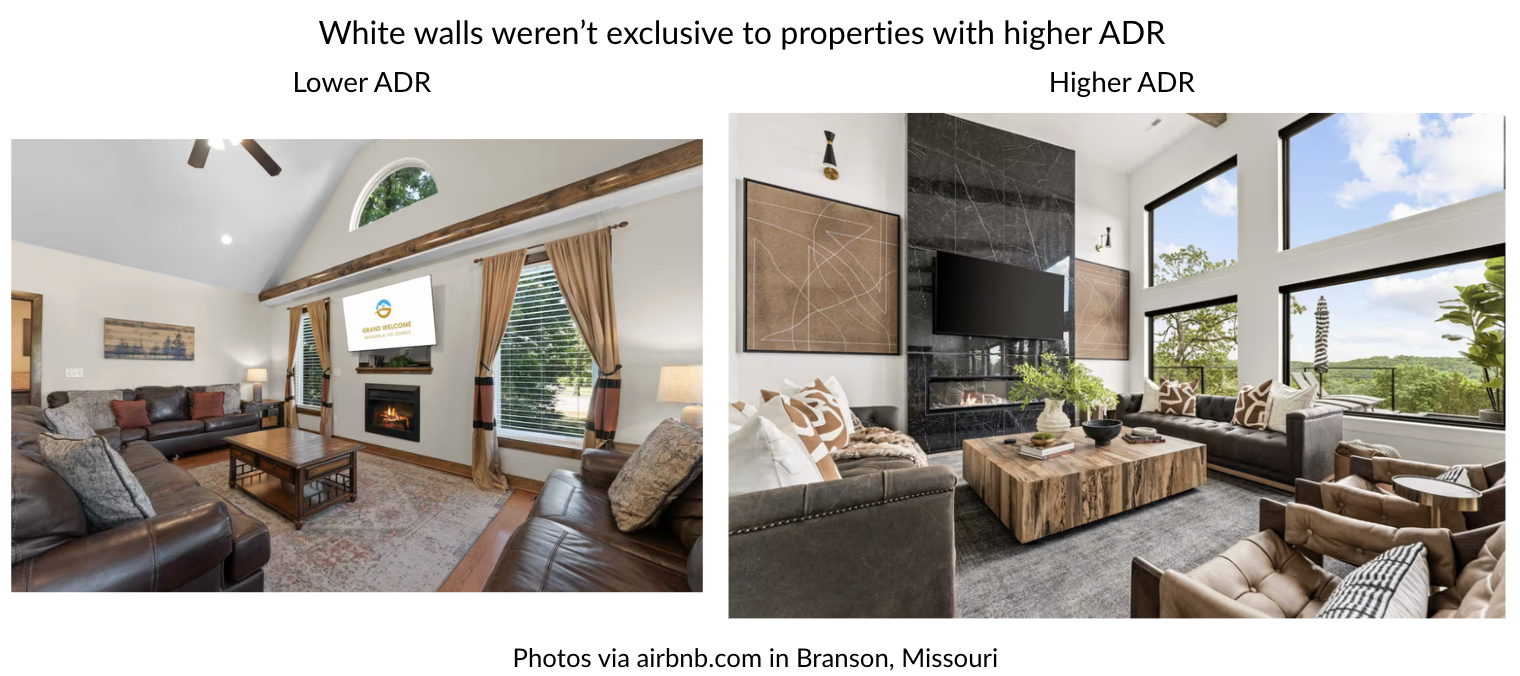
That doesn't mean white walls are a bad idea. Quite the opposite!
I still believe they're an excellent foundation because they create brightness, flexibility, and broad guest appeal.
But here's the important distinction:
White walls are the canvas. They're not the masterpiece.
Simply painting everything white doesn't make a property memorable. It doesn't give guests a reason to choose your listing over twenty others.
Differentiation comes from what you build on top of that foundation.
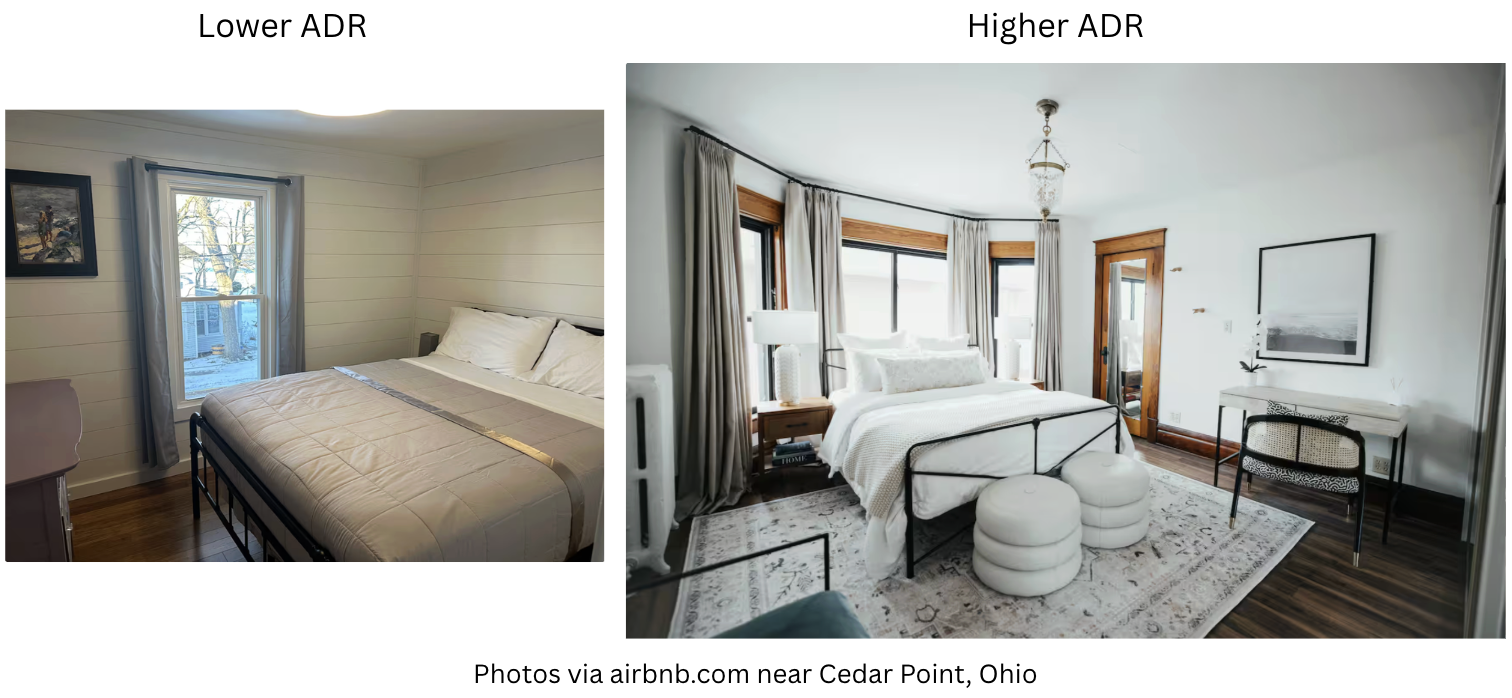
2. Bedroom Focal Points Matter More Than I Ever Expected
If you'd asked me before this study which room mattered most, I probably would have said the living room. After all, that's usually where designers focus.
But my research repeatedly showed something I hadn't fully appreciated.
The bedrooms matter—a lot.
Properties with thoughtfully designed bedroom focal points often created a stronger overall impression than properties with beautiful common areas but forgettable bedrooms.
Think about the guest experience.
The bedroom isn't just where people sleep—it's where they begin and end every vacation day.
A memorable headboard, dramatic wall treatment, beautiful lighting, or intentional styling can transform a room from functional to unforgettable.
3. Most Properties Didn't Have Enough Seating
This finding may have surprised me the most: Across property after property, I noticed homes that slept 8, 10, or even 12 guests—but only seated five or six people comfortably.
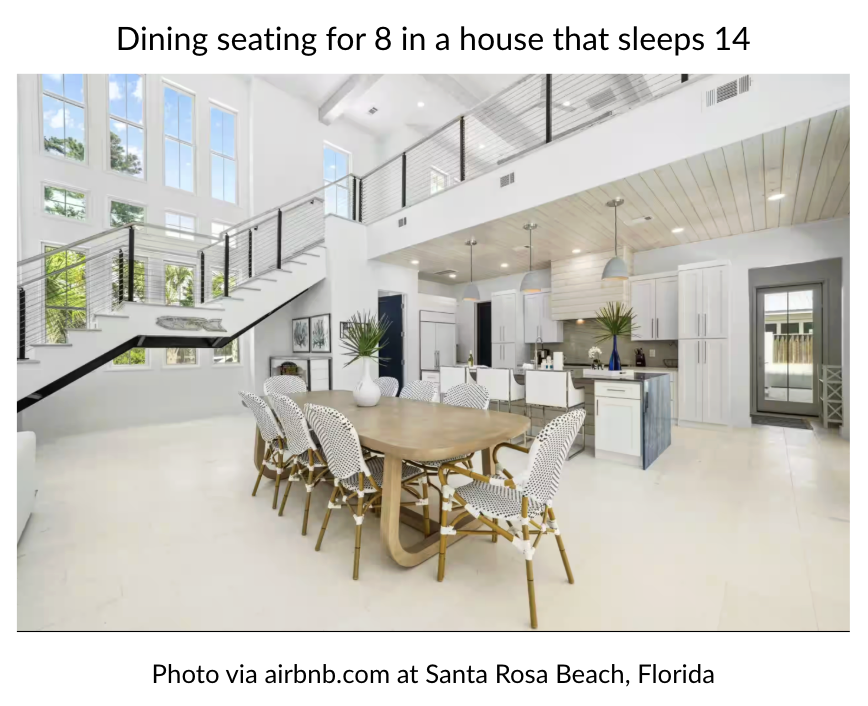
Imagine booking a vacation home for your extended family only to realize everyone can't sit together.
That's not just a design issue—it's a guest experience issue.
Successful STR design isn't about filling rooms with furniture. It's about supporting the way guests actually use the home.
A Shift in Thinking
As I analyzed more properties, I realized I had been asking the wrong question.
Instead of asking: "Does this design feature increase revenue?"
I should have been asking:
"What is this design feature accomplishing?"
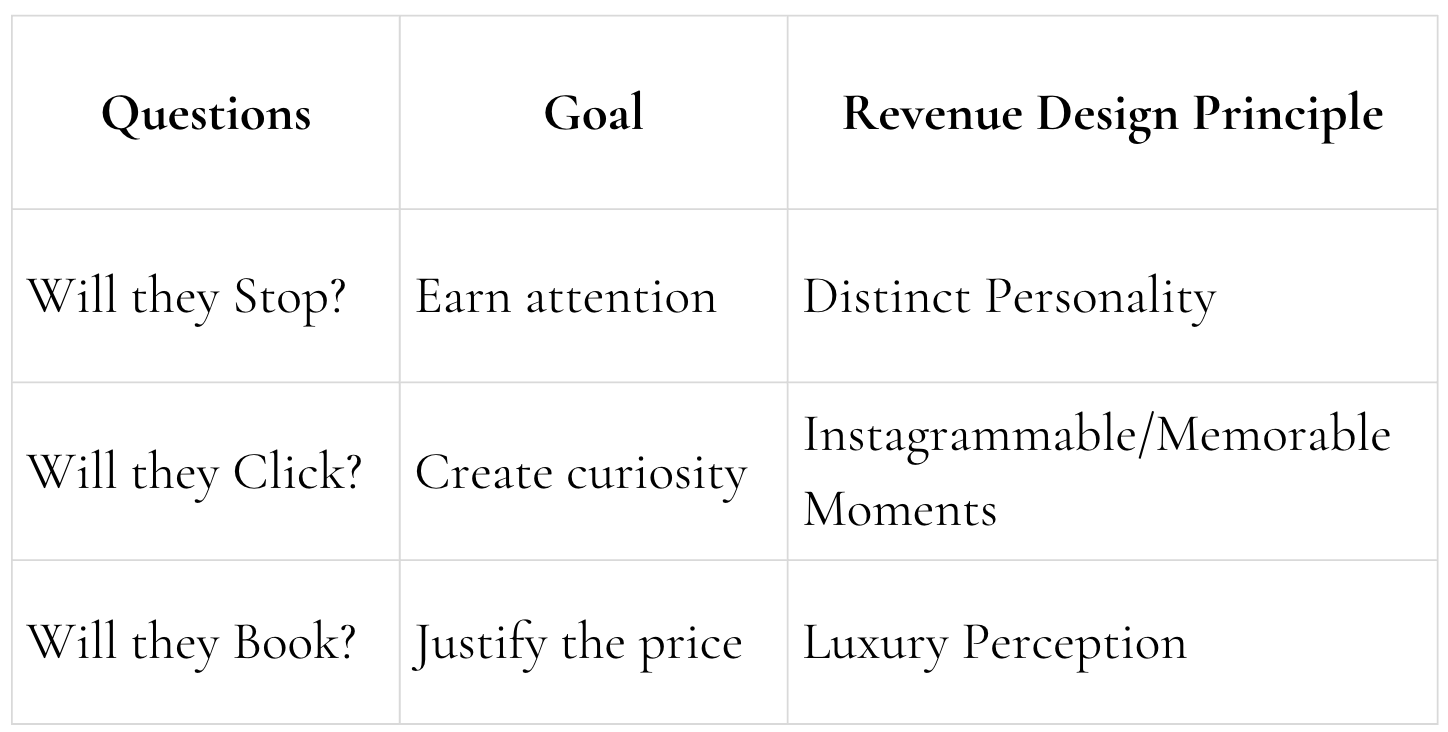
Every design decision should answer three buyer questions:
Will they Stop?
Will they Click?
Will they Book?
I call this the Revenue Design Trio.
It's a simple framework, but it completely changed the way I think about decorating vacation rentals.
Why?
Because while studying nearly 250 short-term rentals across 10 U.S. vacation markets, I discovered that the highest-performing properties weren't just beautifully decorated—they consistently helped guests move through those three decisions.
The 3 Revenue Design Principles I Saw Again and Again
While every market is different, 3 elements were strongly correlated with high-ADR properties.
1. Luxury Perception
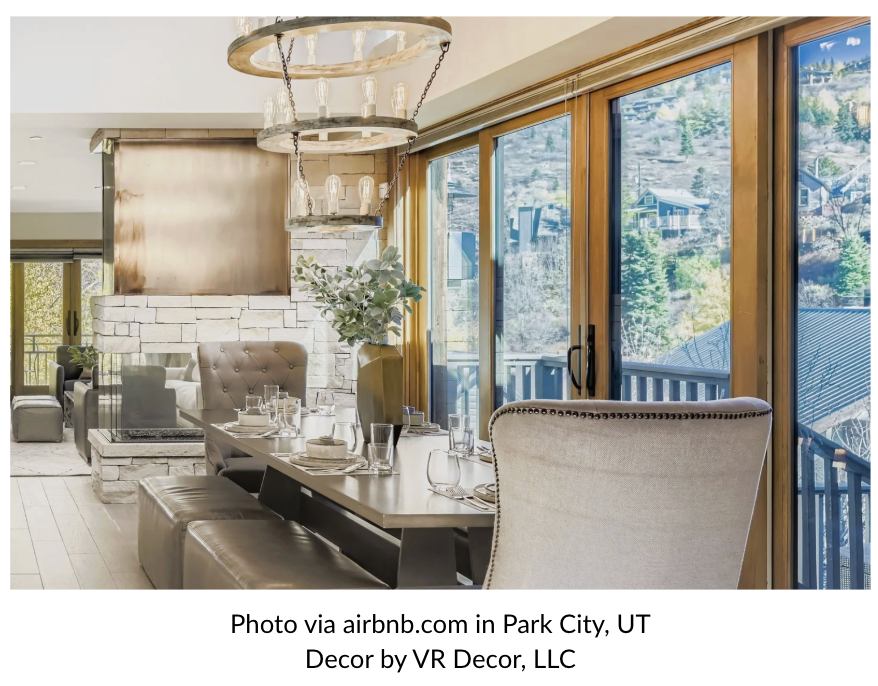
People don't pay premium prices simply because a home is large—they pay premium prices when it looks premium.
If your space isn’t designed for more revenue, it won’t make more revenue.
Perception matters.
After guests click on your listing...Will they feel your property is worth the price?
That's where great design really pays off.
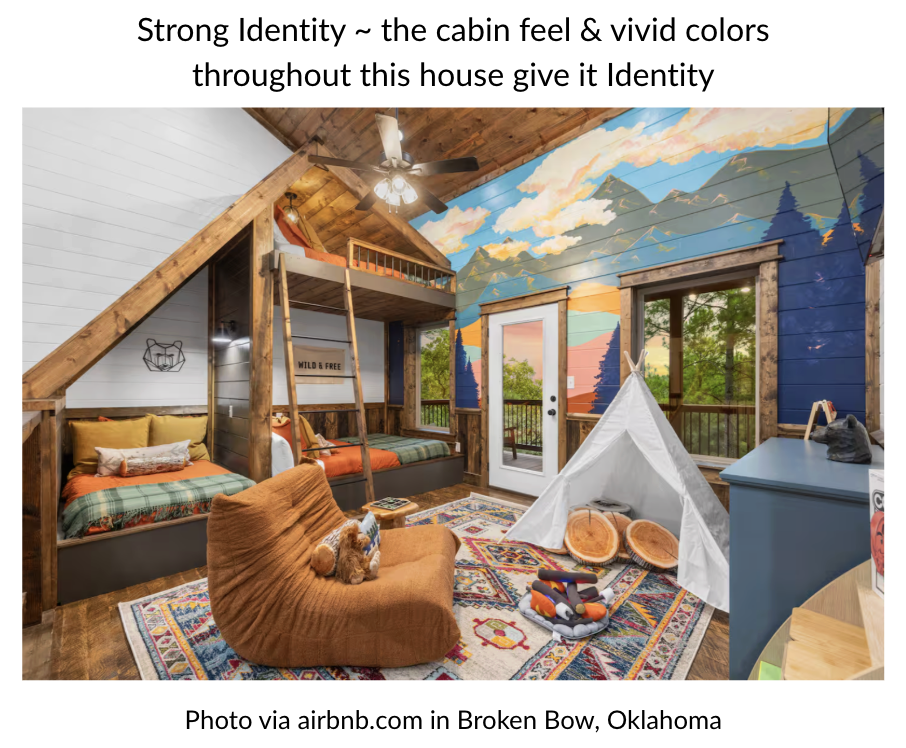
The best-performing properties didn't feel generic.
They had personality ~ They were recognizable.
If I showed you one photo, you'd likely remember it later.
That's exactly what great STR design should accomplish.
3. Memorable Experiences
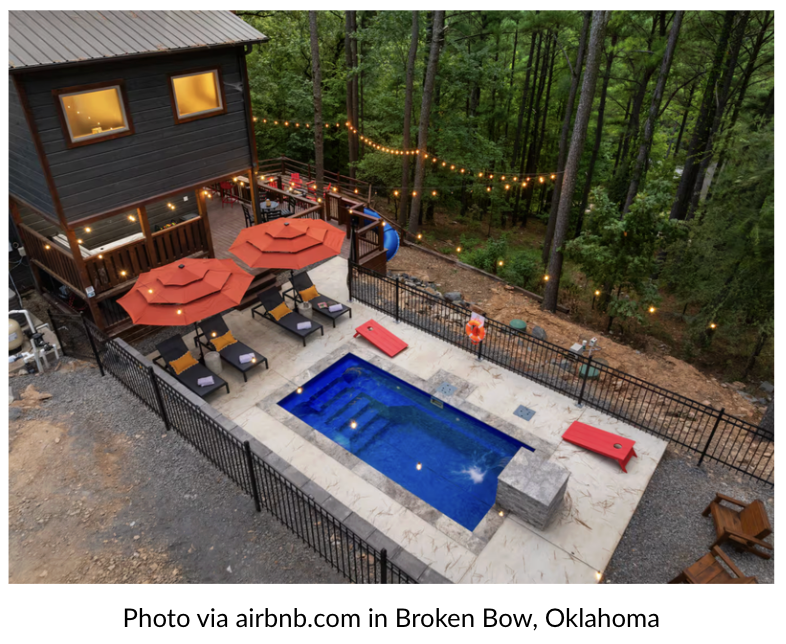
This table pulls together some of the trends in this study:
Why These Design Elements Matter
What's interesting is that this isn't just a personal decorating philosophy.
It's grounded in patterns I observed while studying nearly 250 short-term rental listings across 10 U.S. vacation markets.
Among the design characteristics I evaluated,
*Distinct Personality
*Instagrammable Features, and
*Luxury Perception were consistently those most strongly associated with higher average daily rates.
That doesn't prove these characteristics cause higher revenue. Many factors influence STR performance. But it does suggest they're common traits of properties that command stronger rates.
Because in the end, successful STR design isn't about creating a beautiful home.
It's about creating a property that guests notice...
Choose...
And feel excited to book.
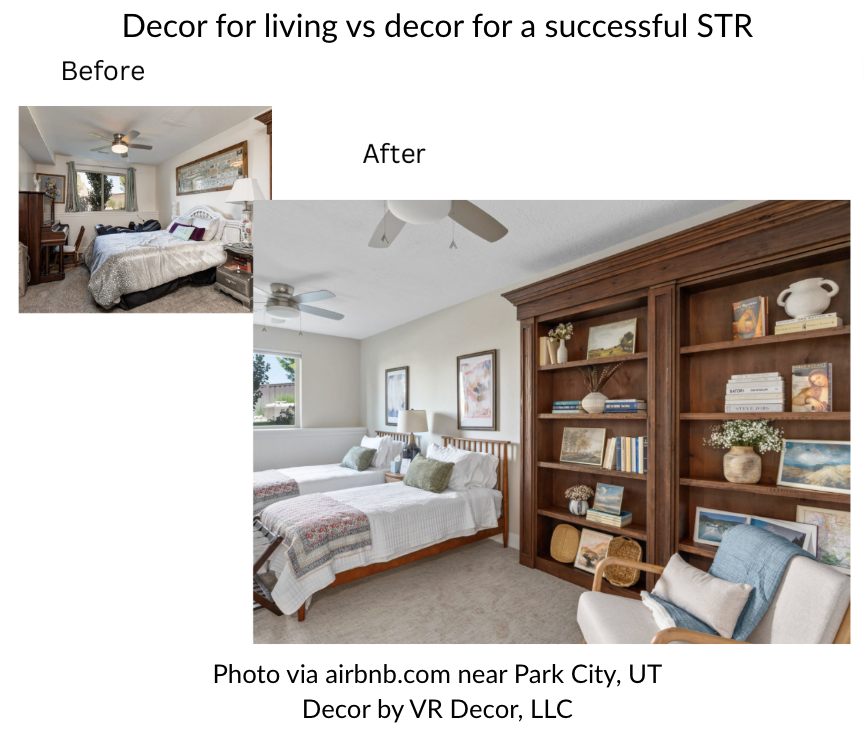
Successful STR Decor Is Different From Home Decor
This may be the biggest mindset shift of all.
When decorating your own home, your goal is to reflect your personal taste…when decorating a short-term rental, your goal is different.
Your home needs to make you happy…your rental needs to attract paying guests.
That's why successful STR decor is different from home decor.
You're not designing just for yourself—you're designing for the marketplace.
What This Means for STR Owners
The purpose of design isn't simply to make a property look nice.
Beautiful spaces are everywhere.
The goal is to create a property that guests remember, choose, and feel excited to book at your asking price.
That doesn't require unlimited budgets.
It requires intentional decisions.
Designing with revenue in mind changes the questions you ask. Instead of: "Do I like this?"
You begin asking:
"Will my guest notice this?"
"Will this help my listing stand out?"
"Will this justify my nightly rate?"
Those questions lead to smarter design investments.
Final Thoughts
When I began studying these 250 STRs, I hoped to validate a few design theories.
Instead, I gained something much more valuable: a new way of thinking about design.
I no longer believe decorating is strongly about aesthetics. I believe it's about business.
It's about creating a property that earns attention, creates desire, and gives guests confidence to book.
Because when design accomplishes those 3 things, revenue has a much better chance of following.
Guests book with their eyes first.
And if your STR isn't designed for more revenue, it probably won't make more revenue.
Ready to See If Your Property Is Leaving Money on the Table?
If you're wondering whether your vacation rental is blending in instead of standing out, I'd love to help.
Contact me below—I’m happy to look at your property and help you get going in the right direction. Just click below.
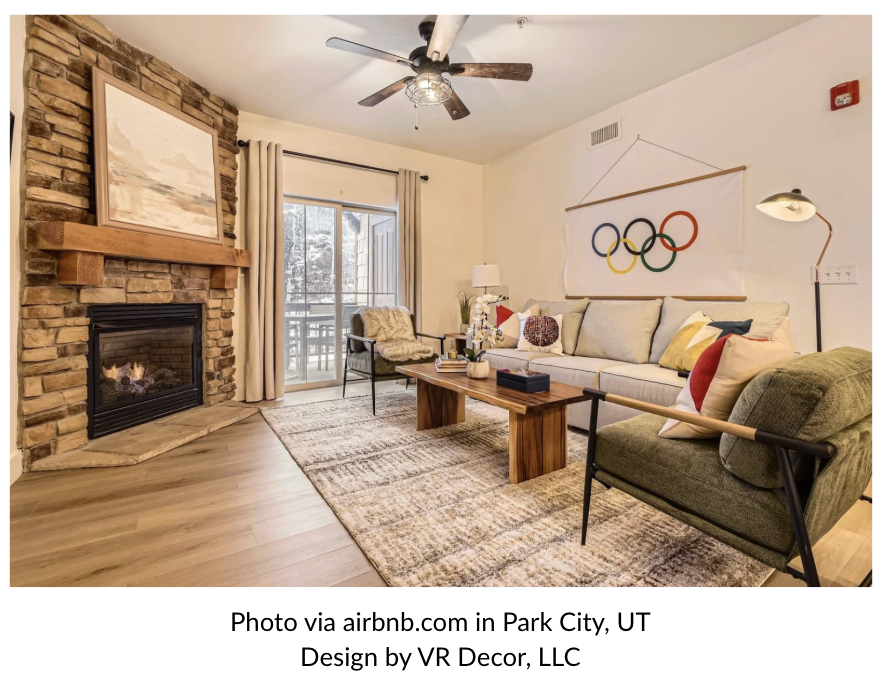
Remember, design isn't furniture—it's a revenue strategy.